Ocean V Virtual Art Residency: Stories told in Time
The Ocean Virtual Art Residency, endorsed as an activity by UNESCO’s UN Ocean Decade, is Moku Art Studio’s international online program for artists passionate about the ocean. If you’re new here, you can read our full guide to what an art residency is before diving in. You can also read about Ocean IV, Ocean III, Ocean II and Ocean I to see how the program has grown.
This V edition consisted of a small group of artists, which allowed us to delve deeper into their artistic projects and invite 2 scientist speakers. All 3 artists worked in different mediums and with different topics, which allowed the group to learn from each other and their interests.
Over the course of five weeks of work, the artists engaged in dialogue, exchange, collaboration, and challenges driven by a weekly theme. This cohort’s main challenge was time. One artist struggled with the time that it took for her supplies to get to her destination, a second artist was struggling with the time it took to test and troubleshoot the materials so they could work for her final vision, and the third artist struggled with the time needed for editing and post production. Perhaps that's the story of Ocean V, not the time it took, but what each artist chose to do with it
Two guest speakers
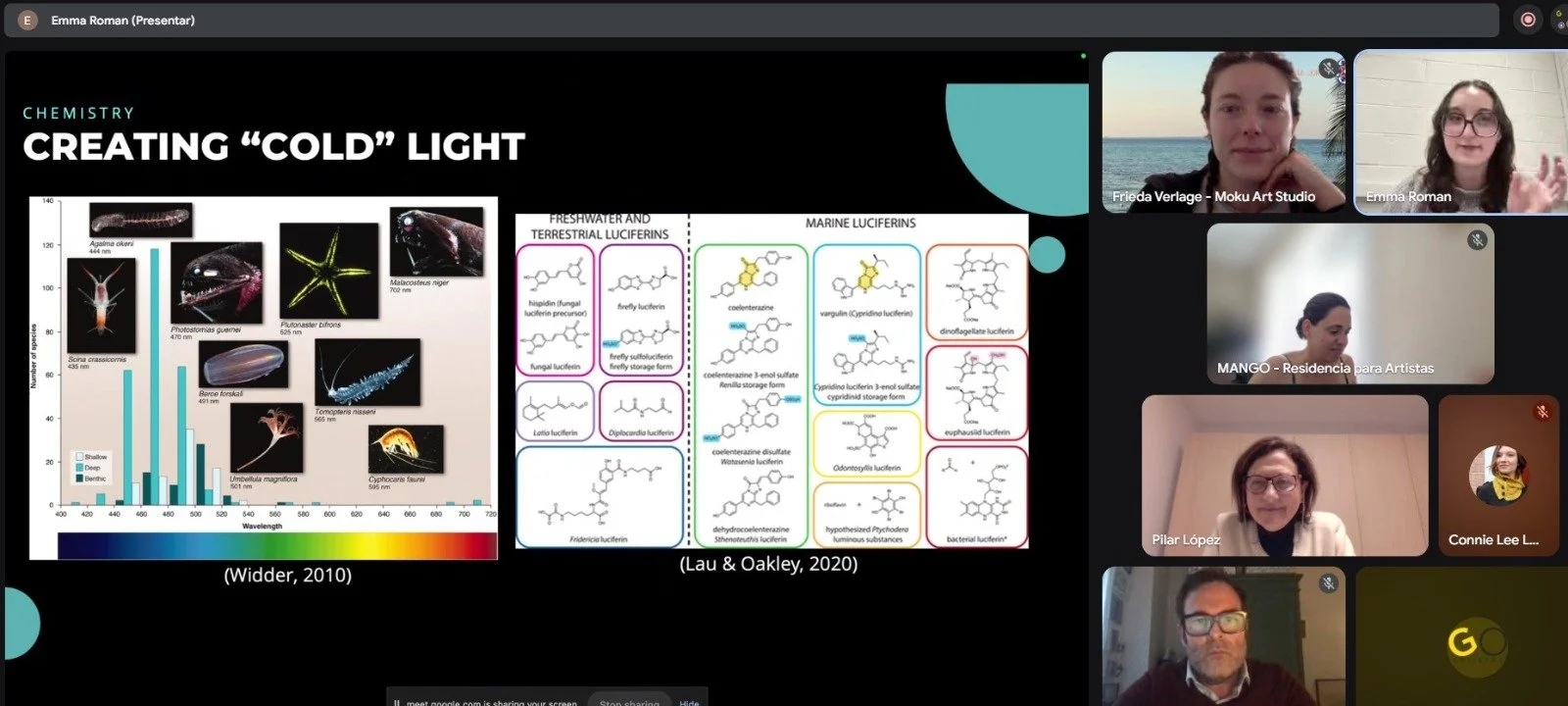
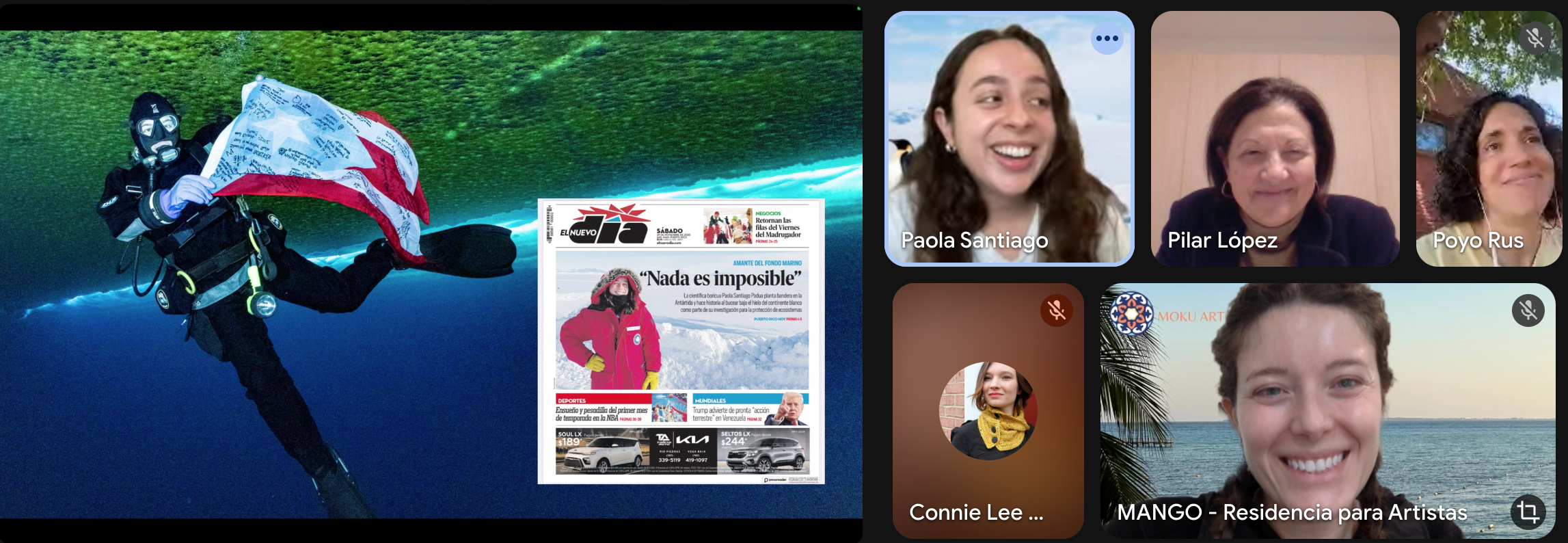
Due to the group being small, we were able to have 2 science speakers during this Ocean edition. We had Dr. Paola Santiago Padua and Dr. Emma Román.
Our Ocean V Artists
The participating artists developed their projects on a personal level, enriched by mutual exchange, sharing ideas, suggestions, proposals, reflections, and more with their peers. In our role as mentors, we contributed week after week with key concepts designed to deepen their introspective connection to their own work, while also encouraging links between the artists. This process challenged each project to follow the natural course discovered by the artist. This V edition of artists’ connection was through storytelling and emotional connection.
Connie Lee Lynch
Connie’s challenge began by deciding the correct color palette for her 4 vertical, handspun and crocheted tapestries, inspired by 4 distinct cardinal directional locations of views of the ocean in Oahu. Connie was working with memory and photos she had previously taken in each location that she was interested in depicting. However, one of her concerns was not having more time to visit the spots again and feeling a little overwhelmed by the color choices to make sure they were accurate. Keeping in mind the important cultural significance of the island and its peoples.
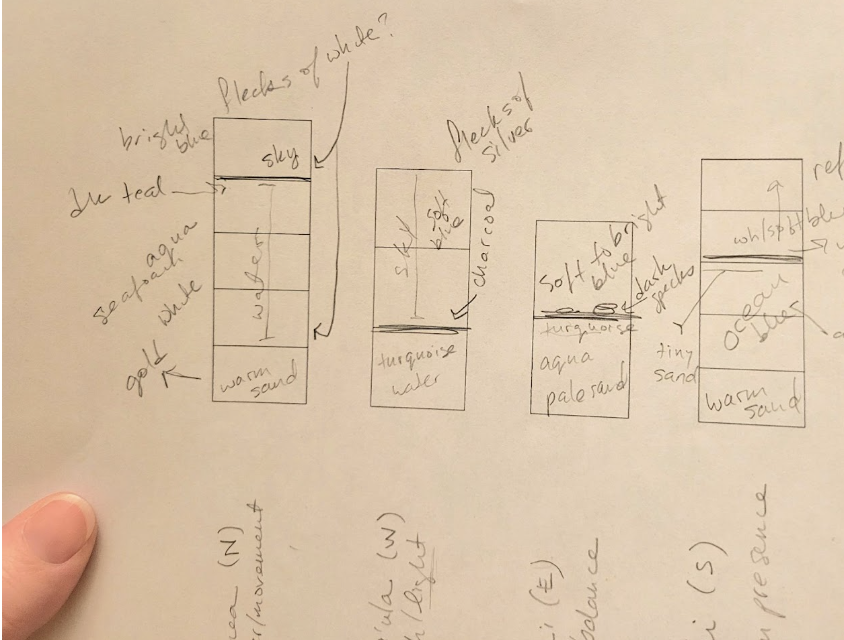
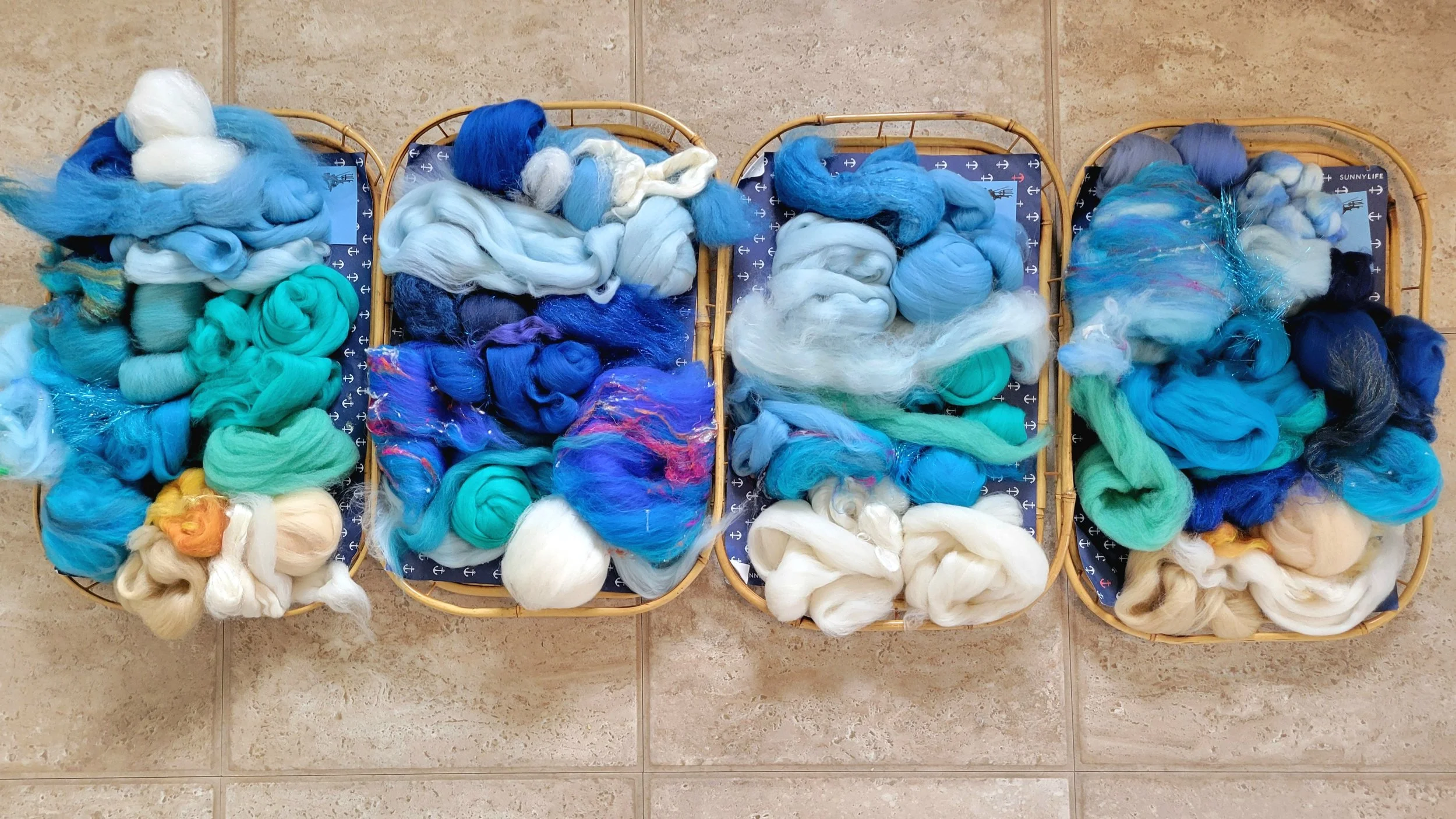
Connie researched the different “perceived colors of the sky and water across different shores in Oahu.” Which determined, in part, her color decisions. She was still nervous about her color choices and the feeling of imposing her “perception” into these 4 locations. In our weekly meets, the other artists shared their experience and opinion, highlighting that in the end, all artists interpret and translate.
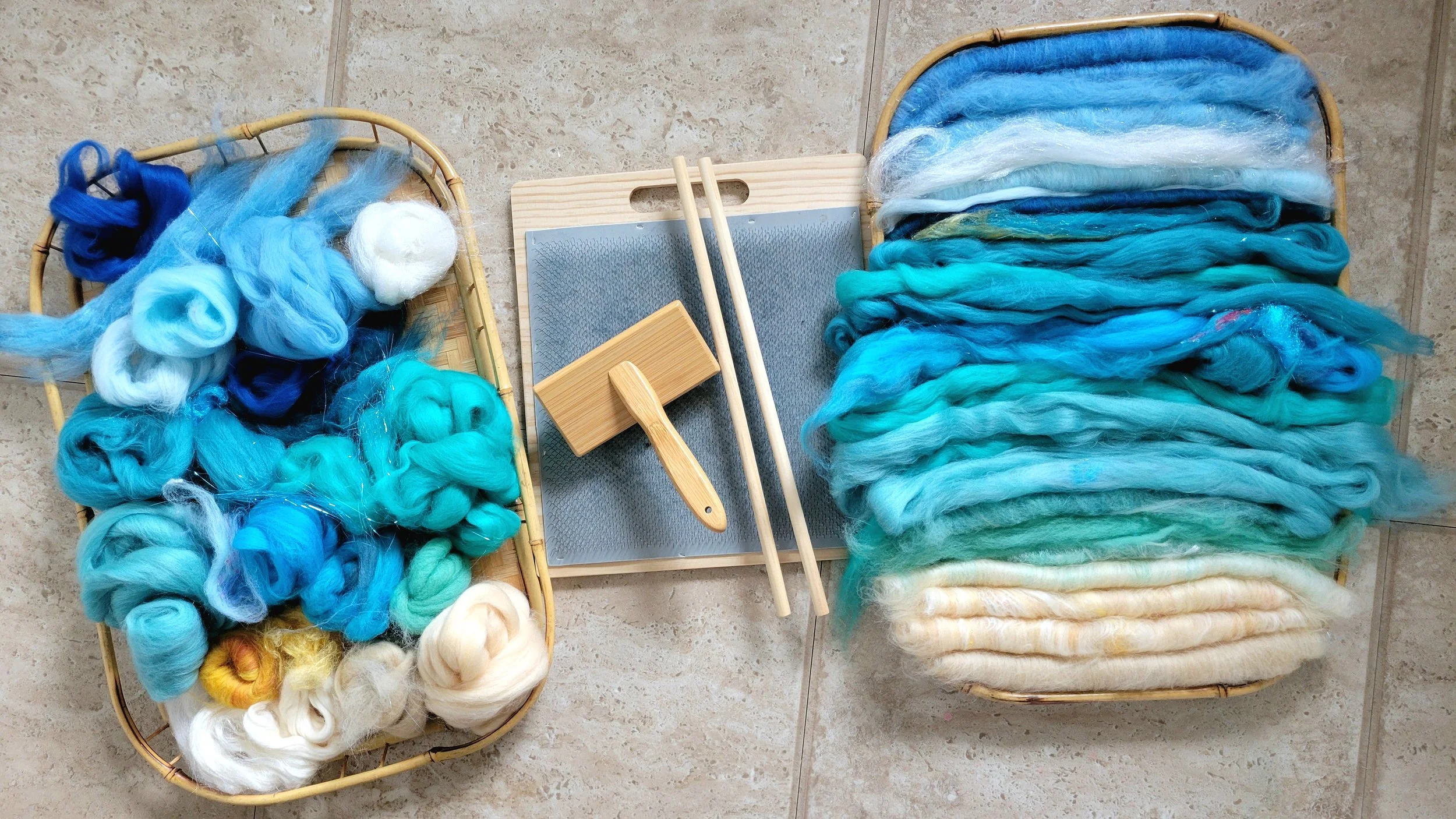
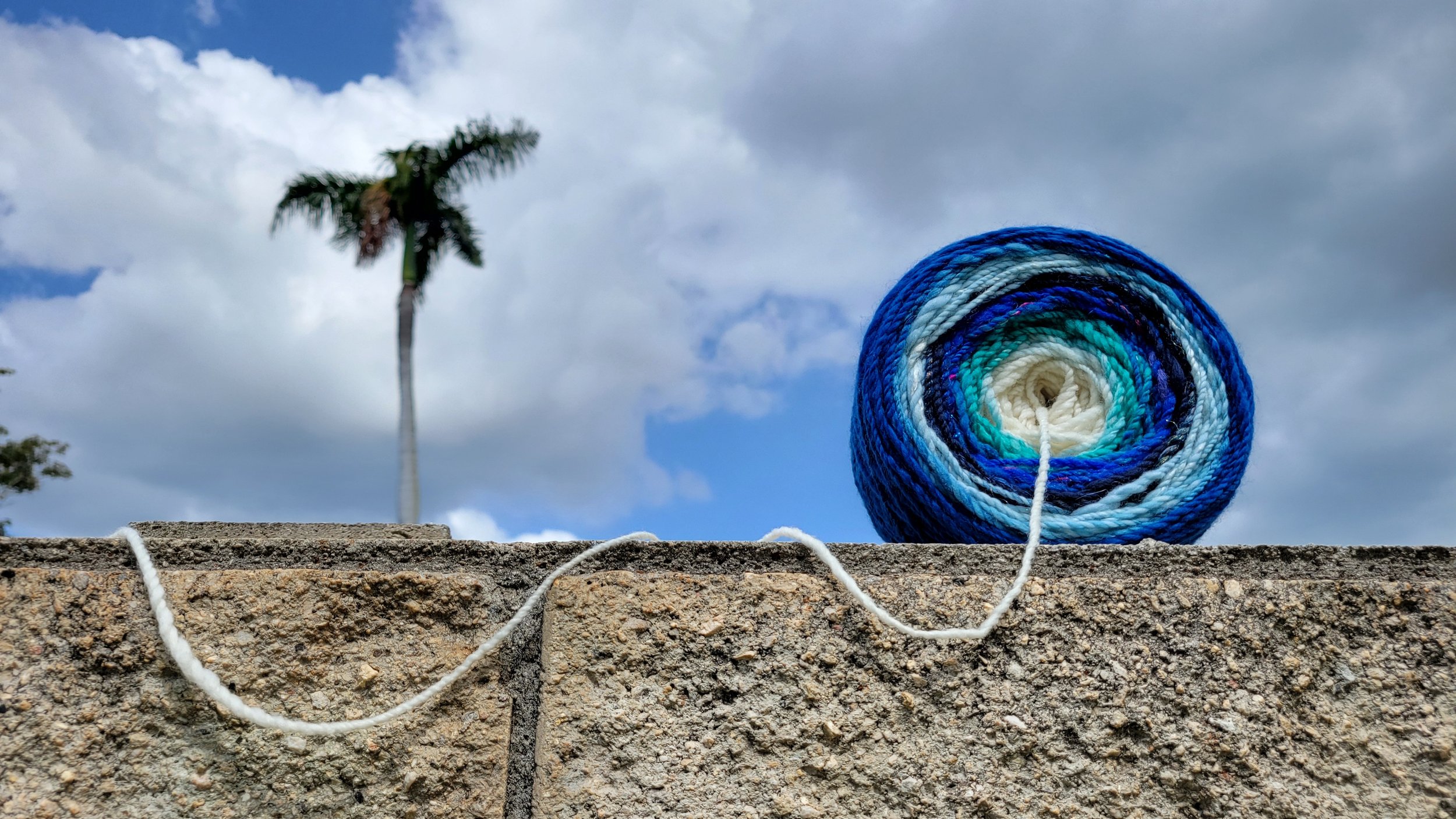
At this time, Connie experienced delays with her materials, since everything takes longer to ship to the island. However, artists learn to adapt and pivot and use the available materials, which is what Connie did. Between the time it was taking for her materials to arrive, and the time consuming process of her art practice, Connie was working against the clock. However, she still manages to produce three beautiful pieces. And although her experience in this Ocean V edition was different than when she first participated in Ocean II, she found the community created during the residency inspiring.
In Connie’s words: “Returning to the residency would also allow me to engage in dialogue with other artists around the urgent need to preserve these places for future generations. My hope is that this body of work can serve as an offering—an invitation to pause, reflect, and reconnect with the ocean not only as a source of inspiration but as a shared responsibility.”
Pilar Lopez Duque
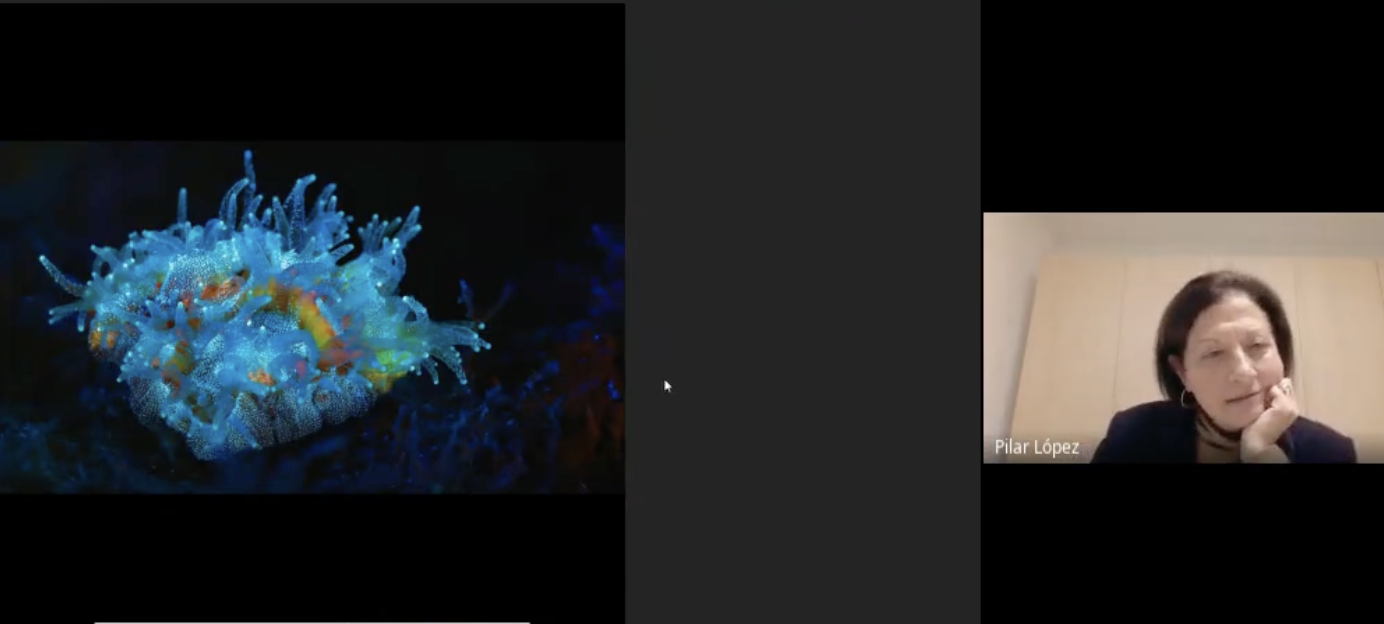
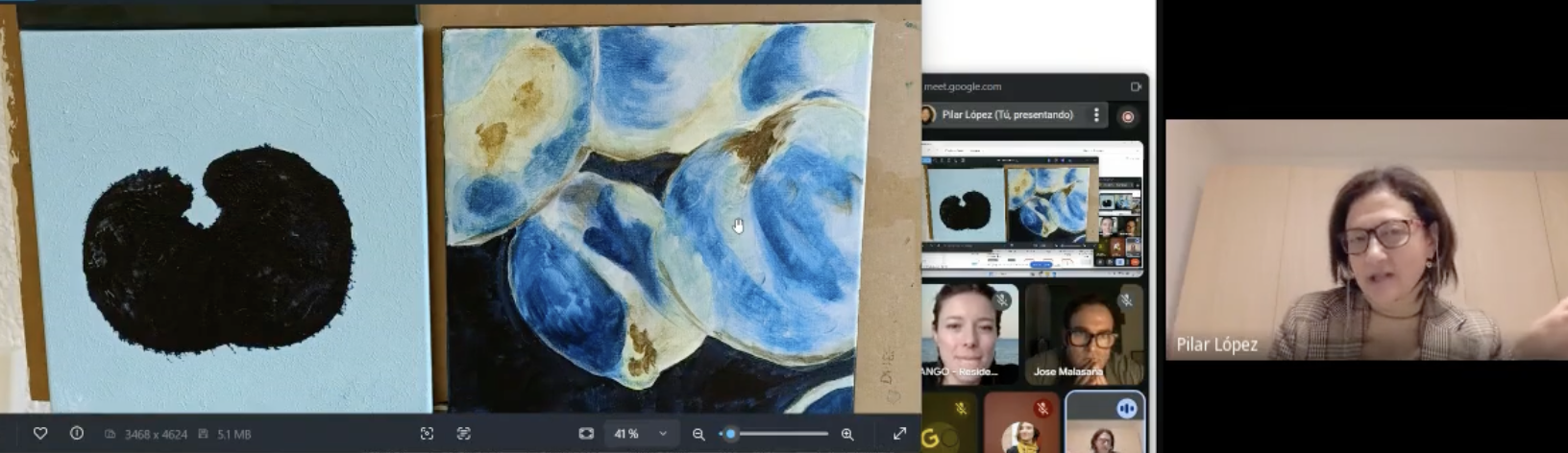
When the residency began, Pilar had a general idea of the topic she wanted to work with. However, after listening to Dr. Emma Román, Pilar was enamored with the idea of bioluminescent creatures. She decided she wanted to explore the connection between bioluminescent organisms and their contribution to cancer research. After clarifying her artistic research project, the next challenge was deciding the technique for the project. Pilar usually creates abstract work, but for this theme, she wanted to work more representationally. A final challenge was the materials, she wanted to use paint that could help her imitate the bioluminescence of her chosen marine creatures.
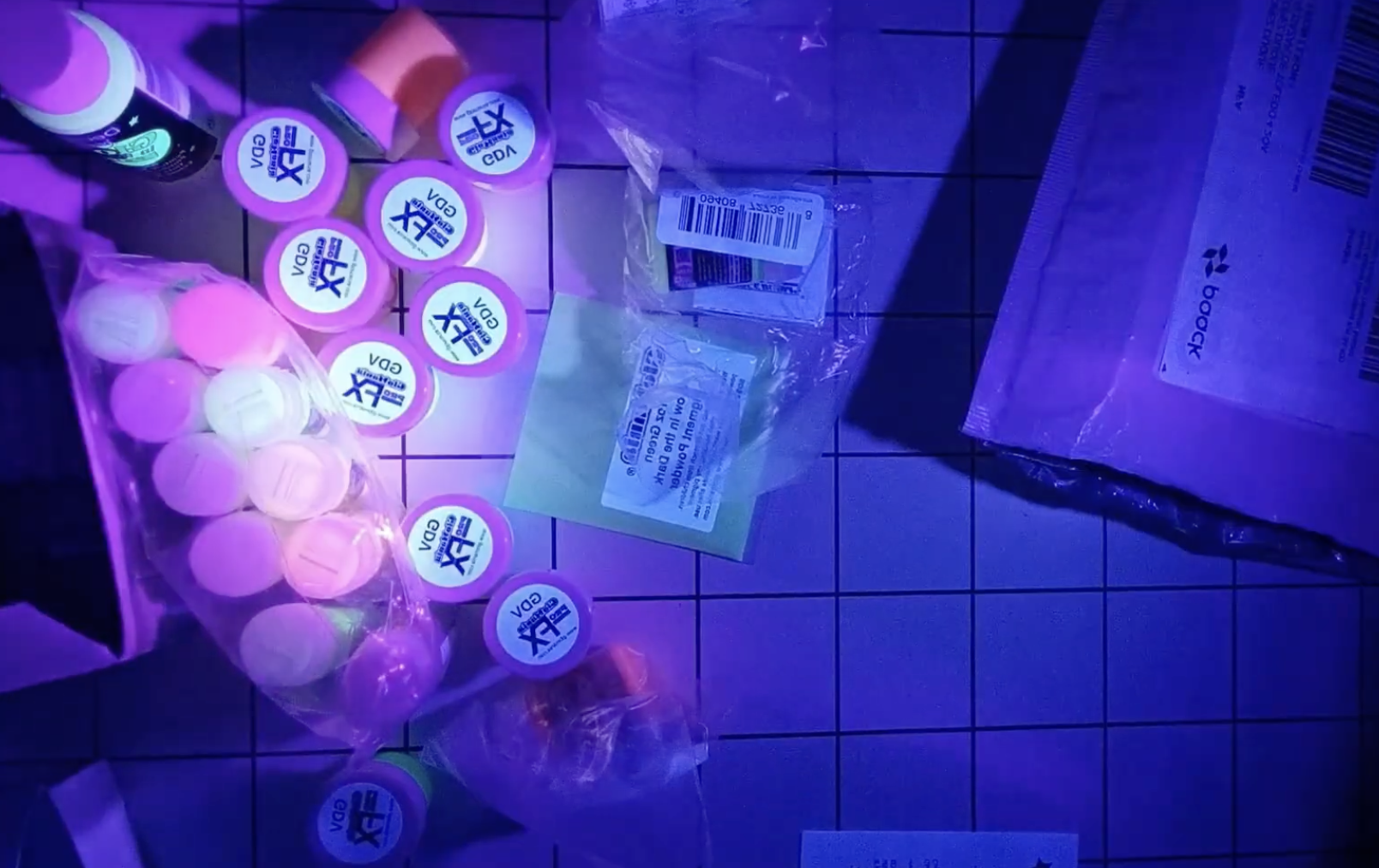
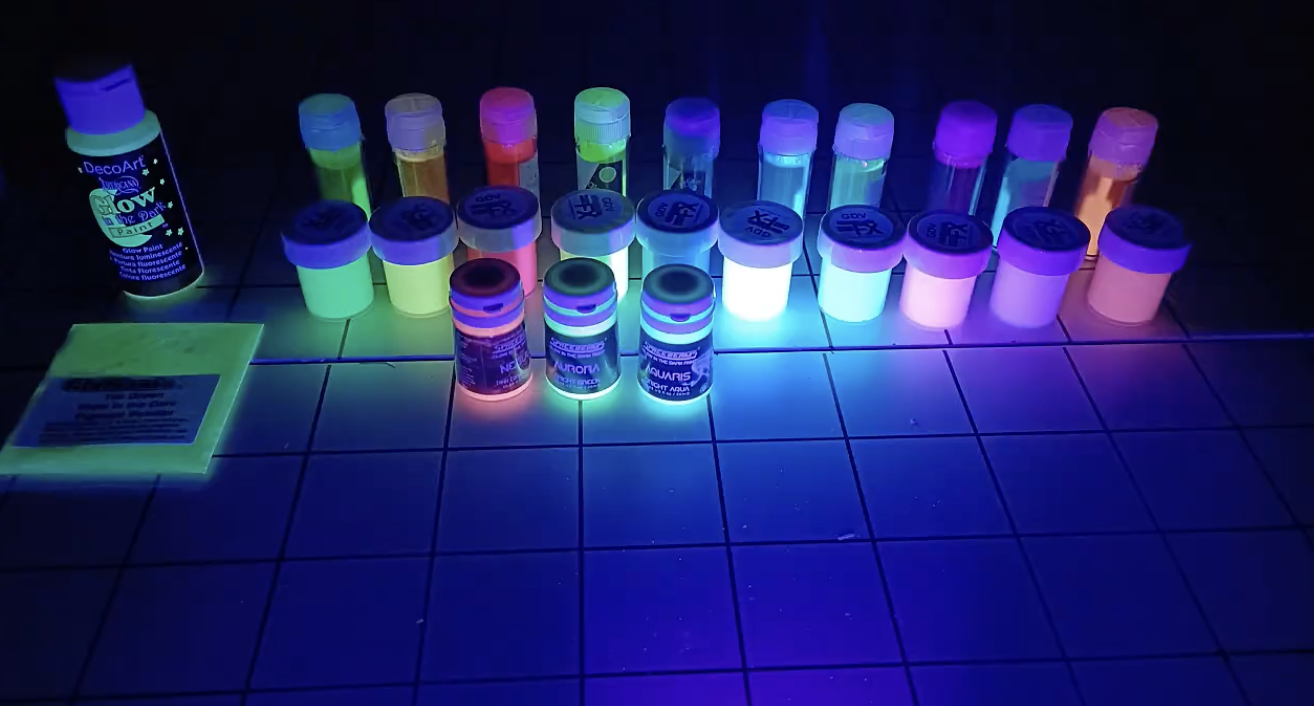
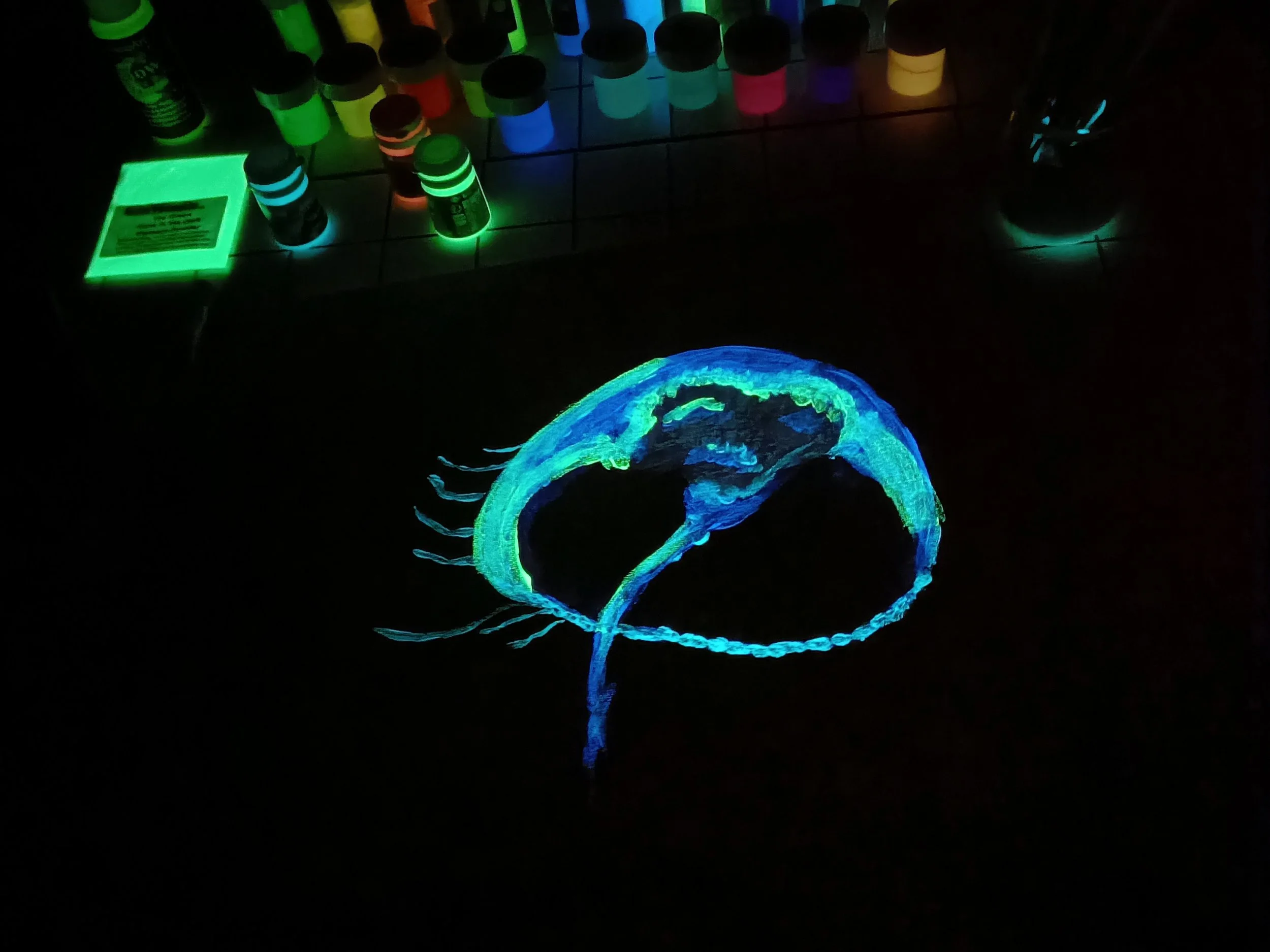
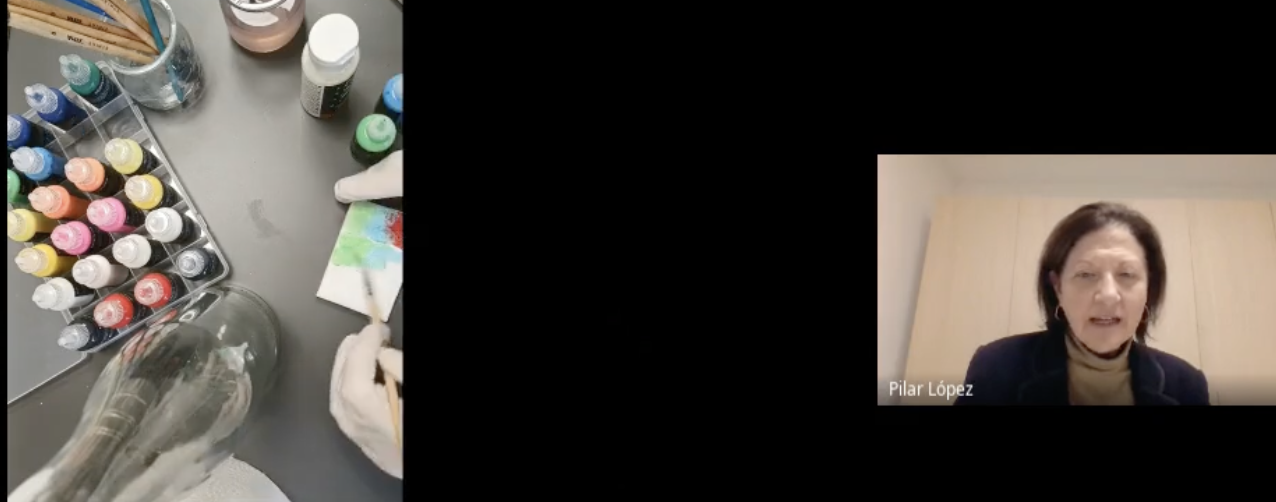
Pilar also was struggling with getting her materials on time. She decided to test other paints and tested them out, but she was not convinced with the results, since they were not very luminous. Pilar, like Connie, had luck because her materials arrived and she was able to test them out and mentioned she had so much fun with them that she brought them to her students so they could also play around with the materials. She was inspired by the vibrant colors and the way they glowed in the dark.
José Malasaña
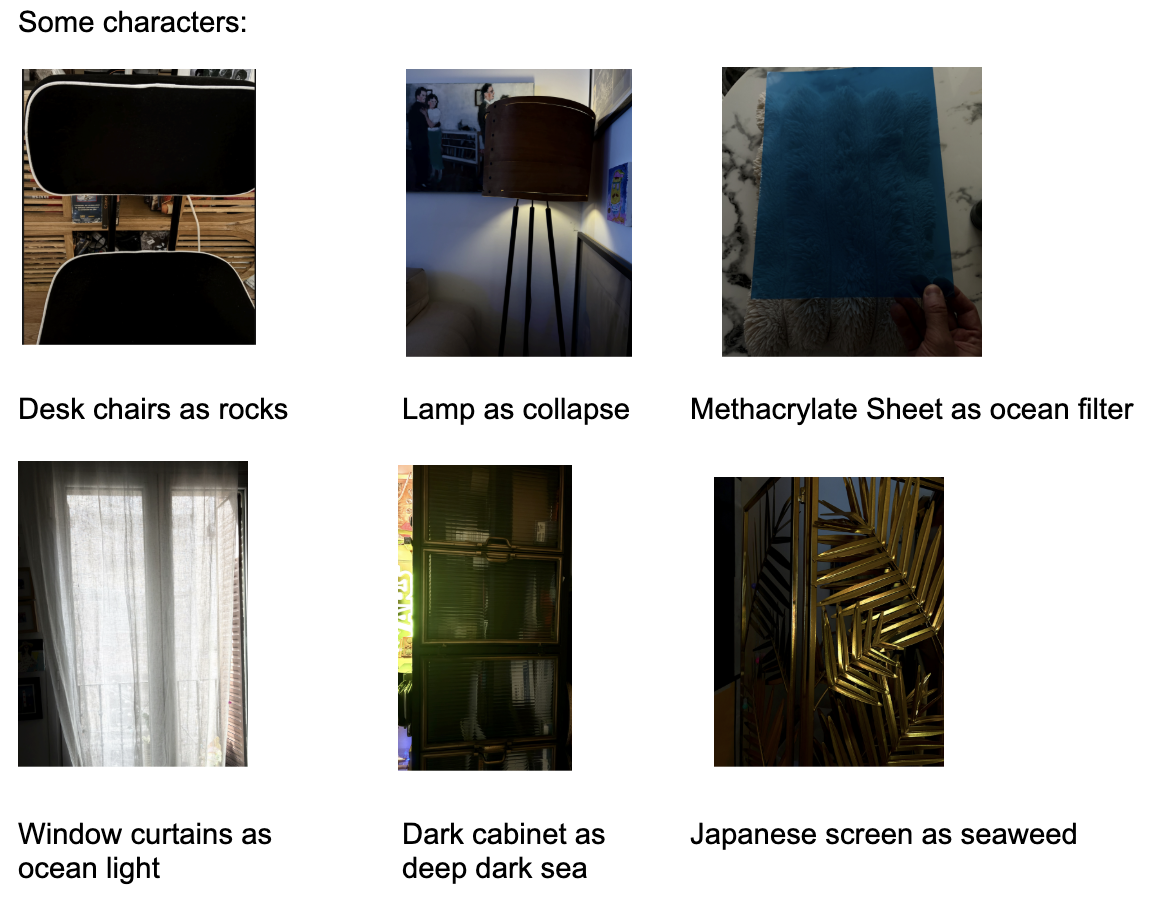
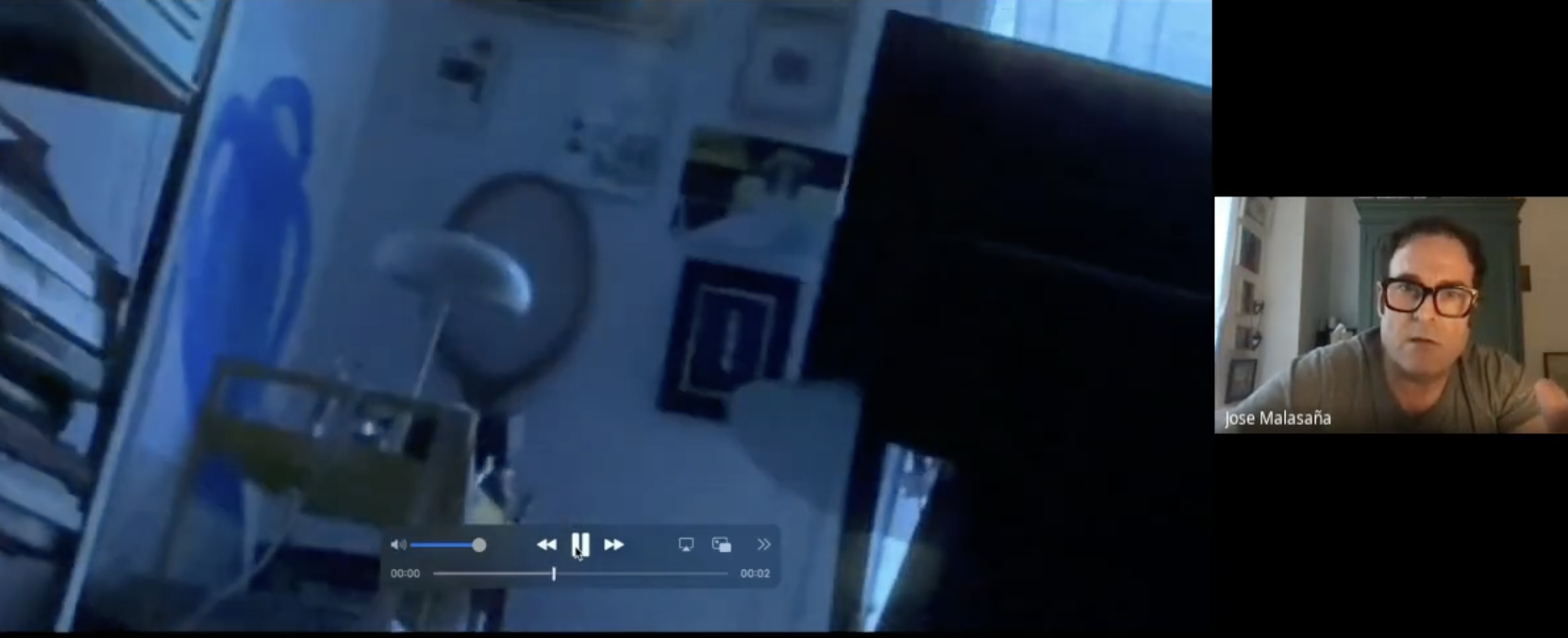
José wanted to highlight the destruction of the habitat of reef creatures in order to raise awareness. He was very interested in using emotional intelligence to make humans empathise with the inhabitants of the reef, by having the film be from the point of view of a fish.
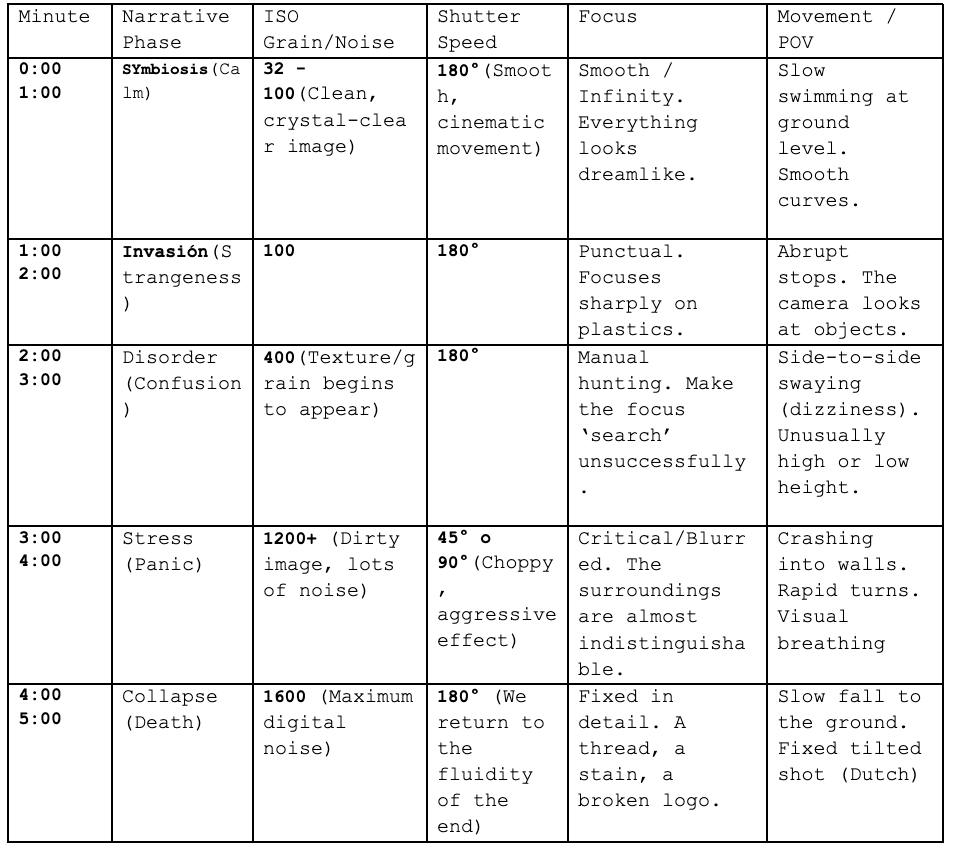
José’s vision was to create a short film, where the home of a human is the environment that is being invaded, a “metaphor for life on a reef.” Technically, he wanted to use digital and photographic technology to shoot his film with a “Super 8 look.” The film was divided in 5 parts with the idea that individual scenes could be used to raise awareness as well as the full short film.
After the 2 science speakers presented to the group, José, inspired by the idea of bioluminescence and ocean tides, changed one of his filming techniques. His takeaway was that “immersing oneself into the underwater environment increases awareness of the life within it; an environment that should not be disturbed.”
José named the 5 sections of his film based on the emotions he wanted viewers to experience: Symbiosis (calm), Invasion (strangeness), Disorder (confusion), Stress (panic), and Collapse (death). At first, he also contemplated having text go along with each section.
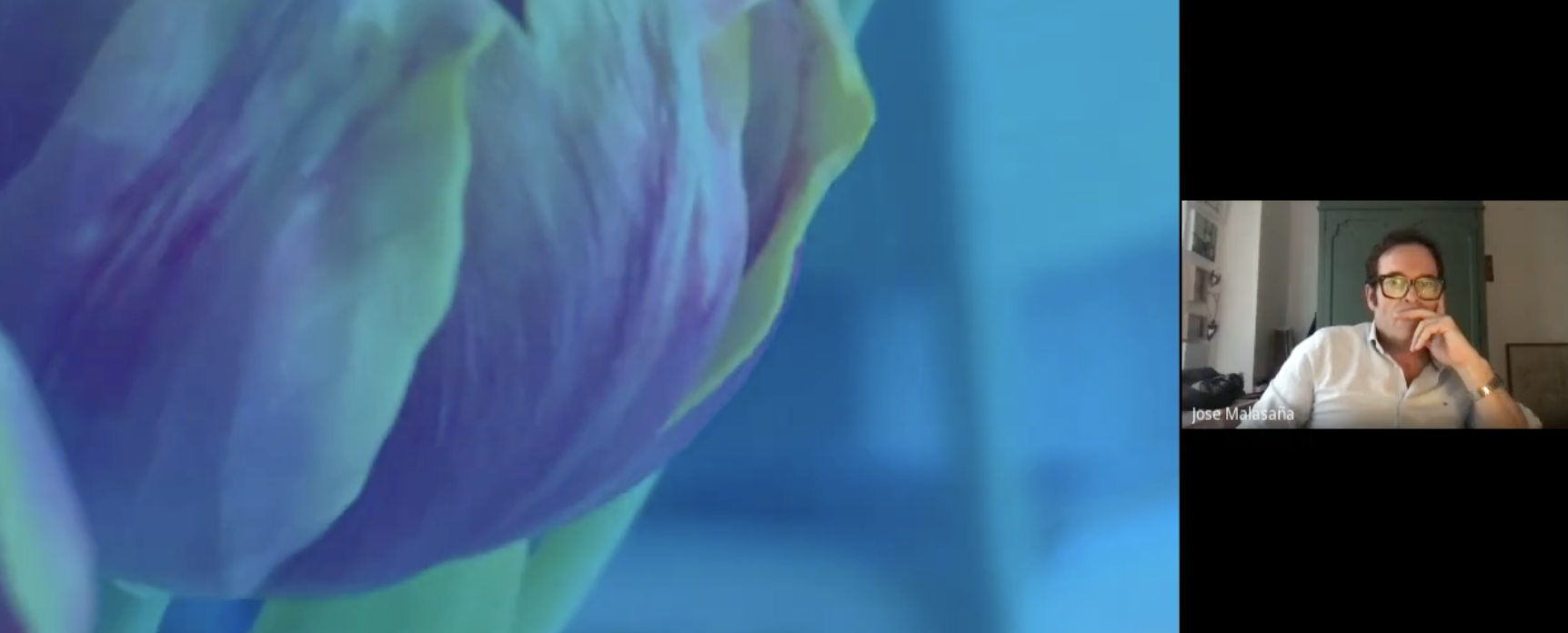
Ocean V Open Studio
At the conclusion of the Ocean Virtual Art Residency, we host a virtual exhibition and open studio event to showcase the projects developed by each participating artist. This culminating moment celebrates the creative journey and highlights the unique ways each artist has engaged with the ocean as both subject and inspiration.