Ocean III Virtual Art Residency: all about collaboration
The Ocean Virtual Art Residency, endorsed as an activity by UNESCO's UN Ocean Decade, is Moku Art Studio's international online program for artists passionate about the ocean. If you're new here, you can read our full guide to what an art residency is before diving in. You can also read about Ocean II and Ocean I to see how the program has grown.
We’ve always considered starting our blog posts by discussing the challenges faced by the residency or artists in general, providing an introduction and conveying the atmosphere of experiencing a new edition of our Ocean program.
This time, we believe the most significant challenge was internal. While we encounter challenges in every residency edition, this one stood out in terms of professional and personal growth, as it marked the first time we introduced music and performing arts alongside visual arts.
Initially, we were uncertain about this approach, but we decided to embrace the challenge, resulting in the most enriching collaboration we’ve had so far. This was our third edition of the Ocean program, and the five-week program served as an introduction to further opportunities for all participants. Throughout the program, a profound sense of commitment to the ocean was evident among the artists, leading to seamless exchange, collaboration, and interconnectedness.
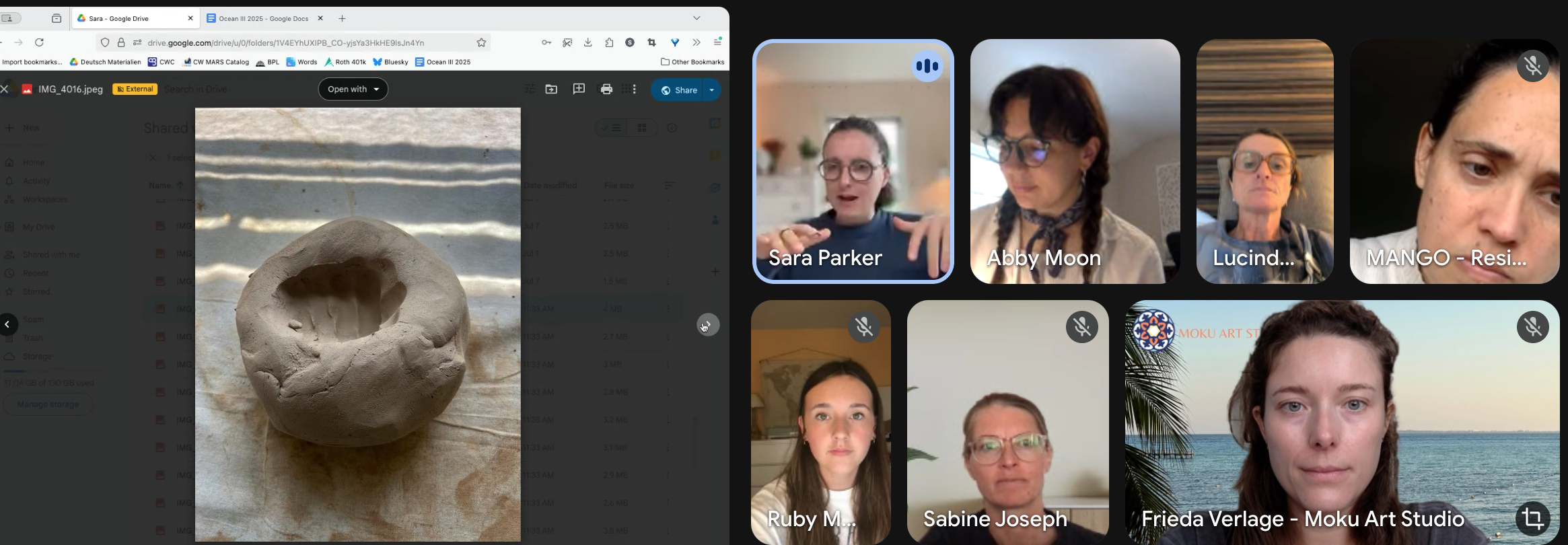
In addition to the artists, this program featured a guest scientist working in oceanography, who shared insights into their work and inspired artists, broadening their perspectives. Artists interpreted technical information, posed questions, and could translate or incorporate it into their artistic projects. The scientist was present throughout the process and expressed interest in witnessing the final results of each project.
The connection between art and science resonated strongly, fostering alliances and collaborations based on the shared commitment to achieving a healthier blue ocean, one of the United Nations’ greatest challenges and primary objectives. This program is endorsed by the UN Ocean Decade.
Our guest speaker
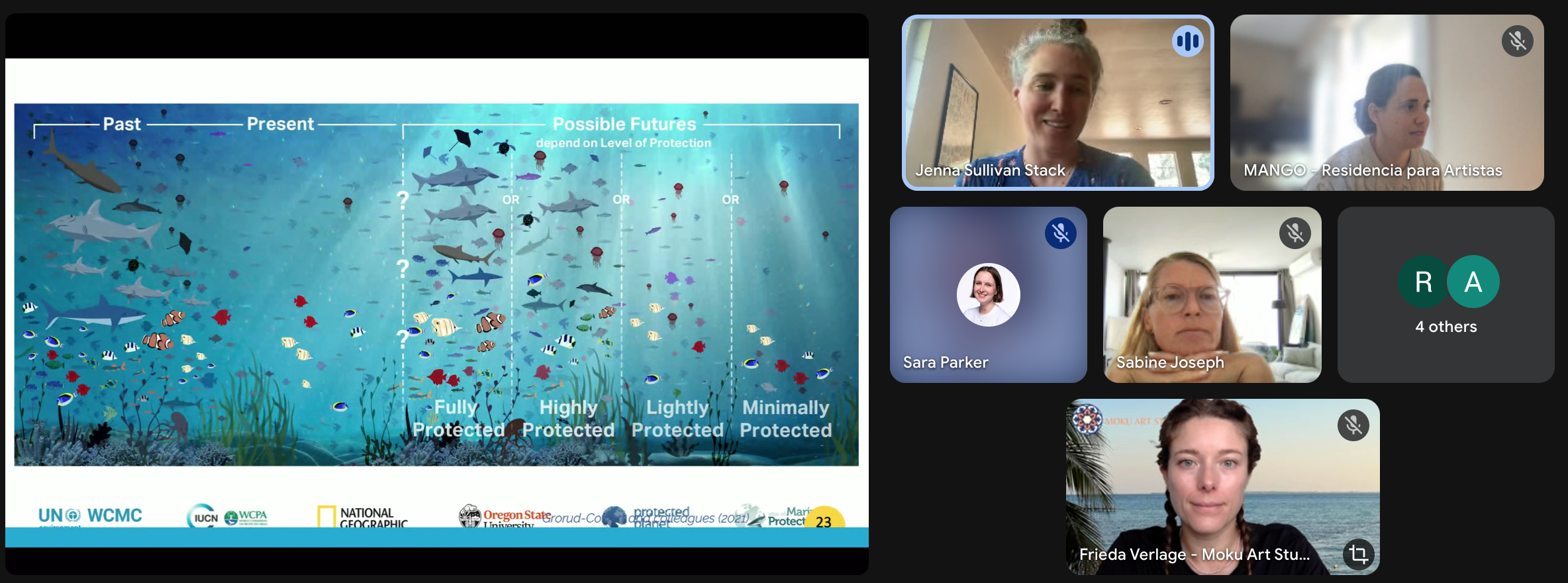
We were honored to host Dr. Jenna Sullivan-Stack, an ecologist and conservation scientist with extensive experience working at sea and contributing to projects for organizations such as NASA. Dr. Sullivan-Stack brought a rich background in intertidal community ecology along the U.S. West Coast, where her research has focused on species interactions and the effects of environmental change. More recently, her work has evolved to include integrating knowledge from both Western science and other knowledge systems to guide ocean protection and management.
It was truly fascinating to gain a glimpse of her expertise. She generously shared her scientific vision and responded thoughtfully to artists' questions about their projects. This exchange deepened participants’ understanding and naturally strengthened their connection and commitment to the ocean.
The artists
The participating artists developed their projects on a personal level, enriched by mutual exchange, sharing ideas, suggestions, proposals, reflections, and more with their peers. In our role as mentors, we contributed week after week with key concepts designed to deepen their introspective connection to their own work, while also encouraging links between the artists. This process challenged each project to follow the natural course discovered by the artist.
Sarah Parker
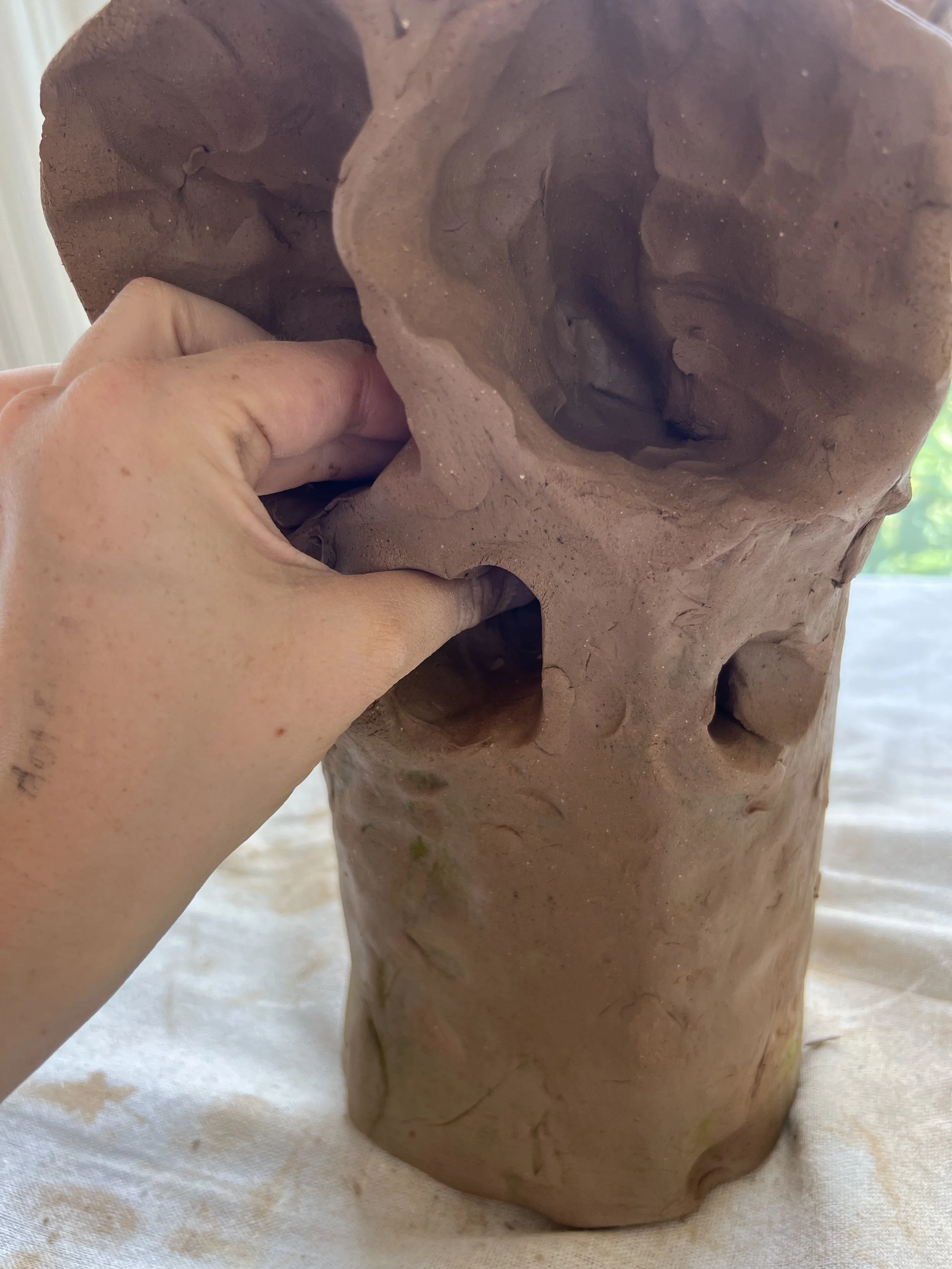
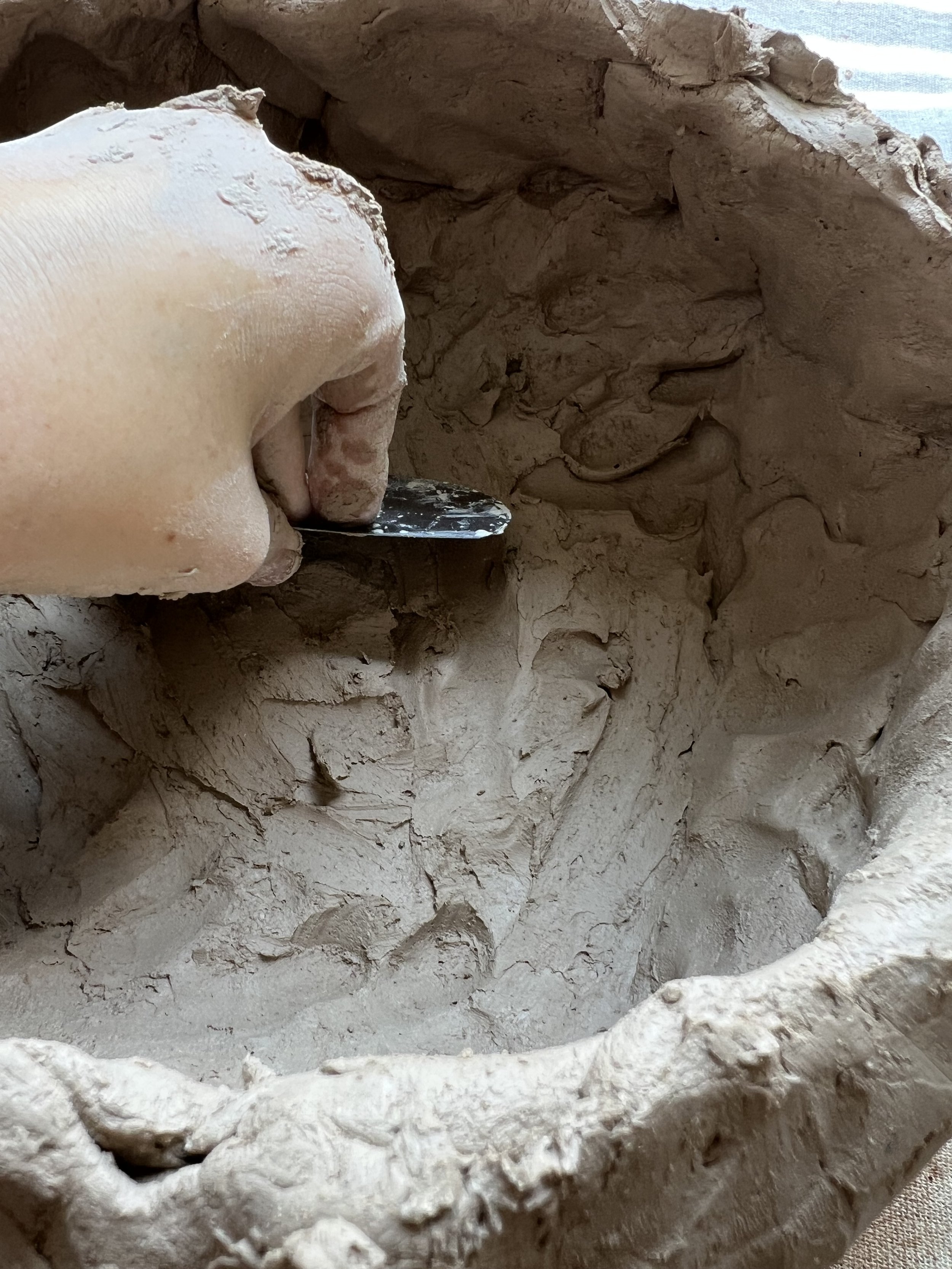
Sarah’s project continued her interest and focus on cilia as a “form of filtration and memory-keeping.” She is interested in the narratives of “grief and survival through the Anthropocene and how our relationship with the micro and the macro in the ocean can help us better understand our emotional experiences.” Sarah's challenge was getting her “butt into the studio and psychological resilience and perseverance” in the studio and playing with the clay.
Because she uses reclaimed clay, the process is a little bit different, and the results vary. She liked using her hands to create her pieces, essentially building complex pinch pots and being intuitive in where to place her marks. Grief plays an active role in her art practice, since she never knows if the pieces will survive translating them from her work table to the kiln, or if the firing will destroy them.
She is the translator or interpreter of a topic, theme, problem, etc, from the community and translates it through her work to a final piece. Her pieces have their own language that is interconnected through her hands.
Abby Moon
Abby’s project is a graphic novel that explores Massachusetts North Shore salt marshes and her experiences visiting this part of the state and how salt marshes are important environments worthy of continued preservation efforts because they are complex ecological sites, sequestering a lot of carbon.
She decided to challenge herself in working with a new medium, pen and ink. In her comic, her drawings have a unique sketchy style that let us dive into her personal feelings.
Abby and Sarah connected through the topic of Grief. While working on her comic and being in the salt marshes Abby got hit by a wave of grief for the place she was experiencing and how climate change is affecting it and how it would look like in the future, or if it would even still exist. She felt paralyzed by her grief and intense emotions and was unsure on how to continue with her comic. Sarah talked about how grief shows in her art practice and advised Abby to give space in her own art, how providing a safe space to explore this grief, climate change dread and feeling overwhelmed also need a valid space to exist and be explored.

Dr. Sabine Joseph
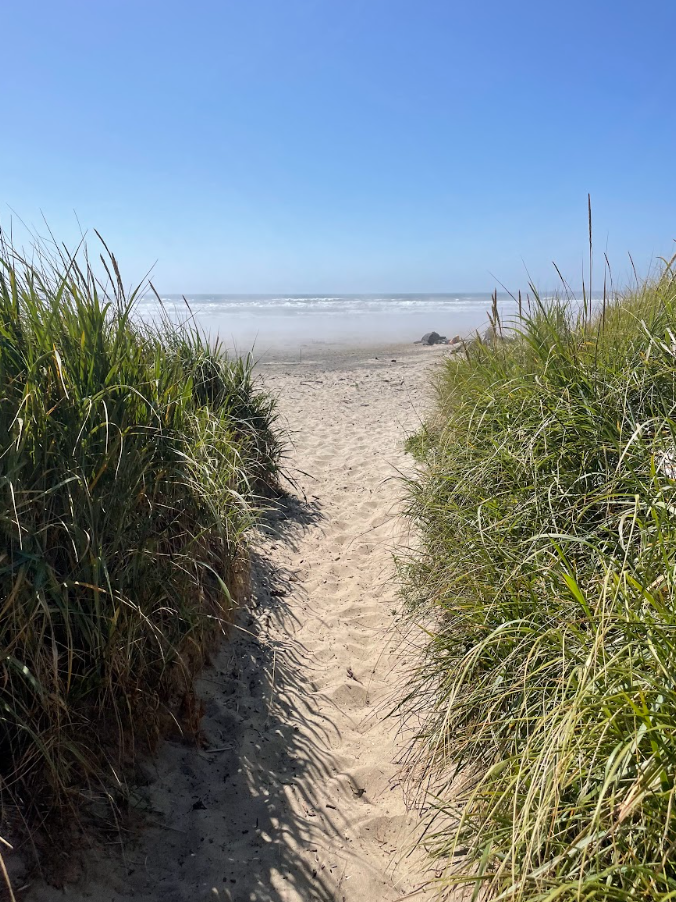
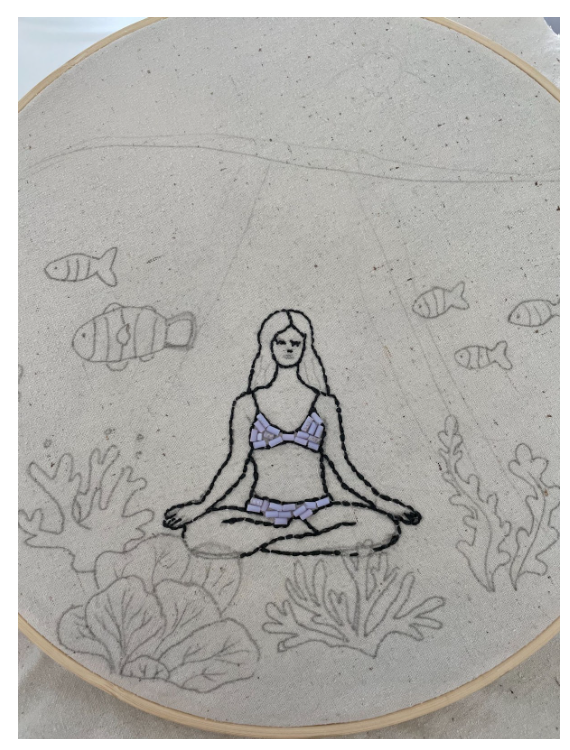
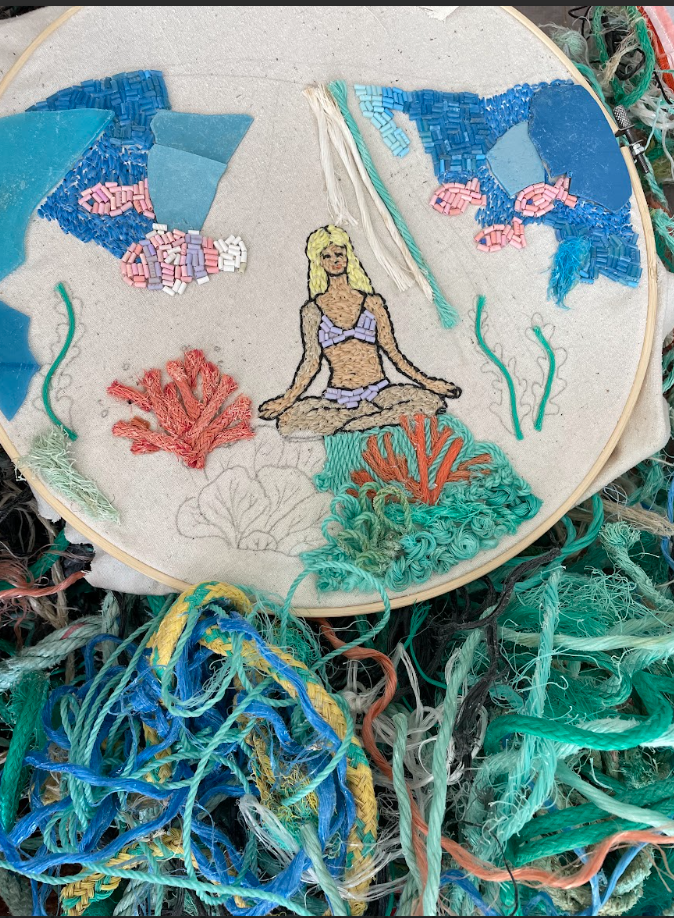
Sabine’s project encompasses ocean-themed embroidery using beach-found plastic and marine debris to convey environmental awareness and connection to the sea. Part of her creative process is to go to the beach, walk its natural layers, from the shores to the different levels of the time, beachcombing and reclaiming materials that will become part of her artwork. Sabine believes that although we never know how small or big our impact can be with something as simple as recollecting a piece of beach trash, everything is connected, and it causes a “ripple effect.” Every choice we make creates an impact, and contributes to a social shift. The “energy grows inside of us and radiates outwards until it finds others who are also choosing to create, contribute and connect.”
Her final pieces seem to transmit even a profound ocean wonder and beauty, that is her touch and how she decides to leave us a positive and hopeful message through her pieces.
Lucinda Button
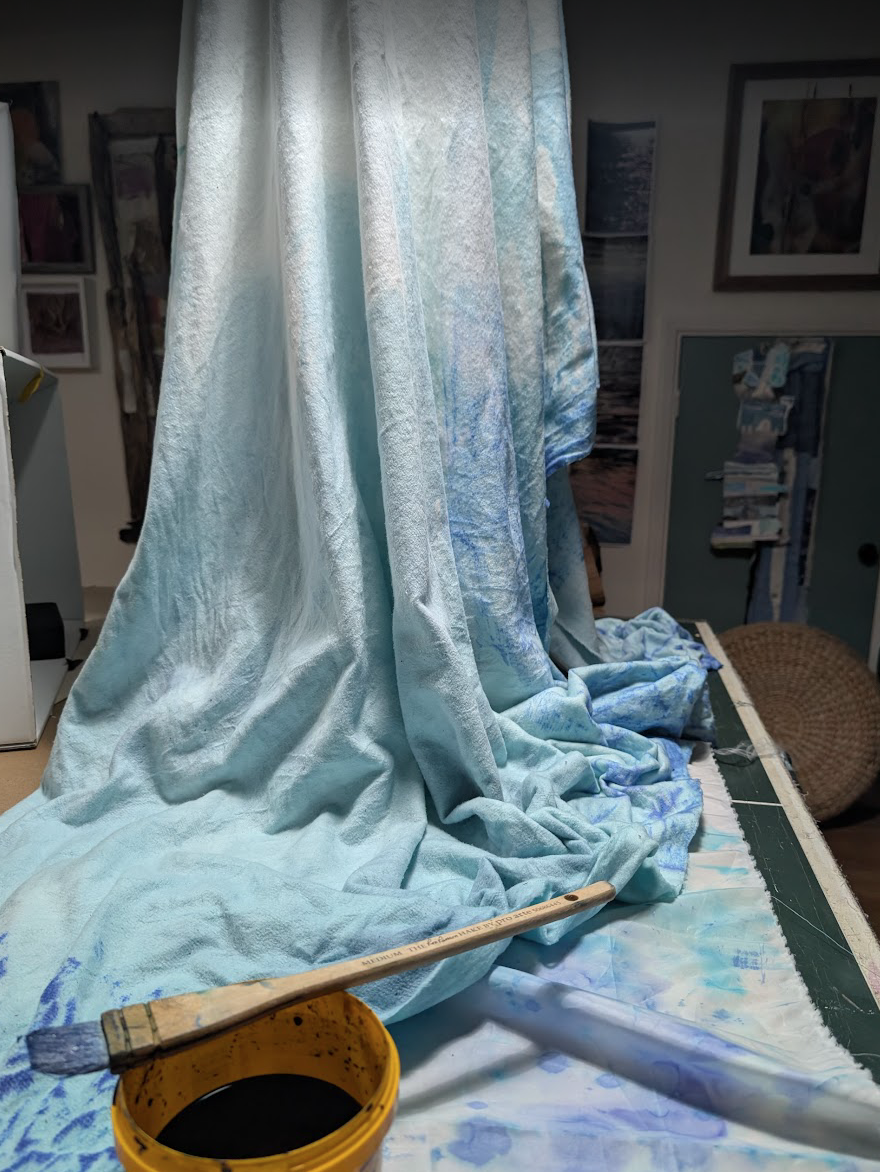
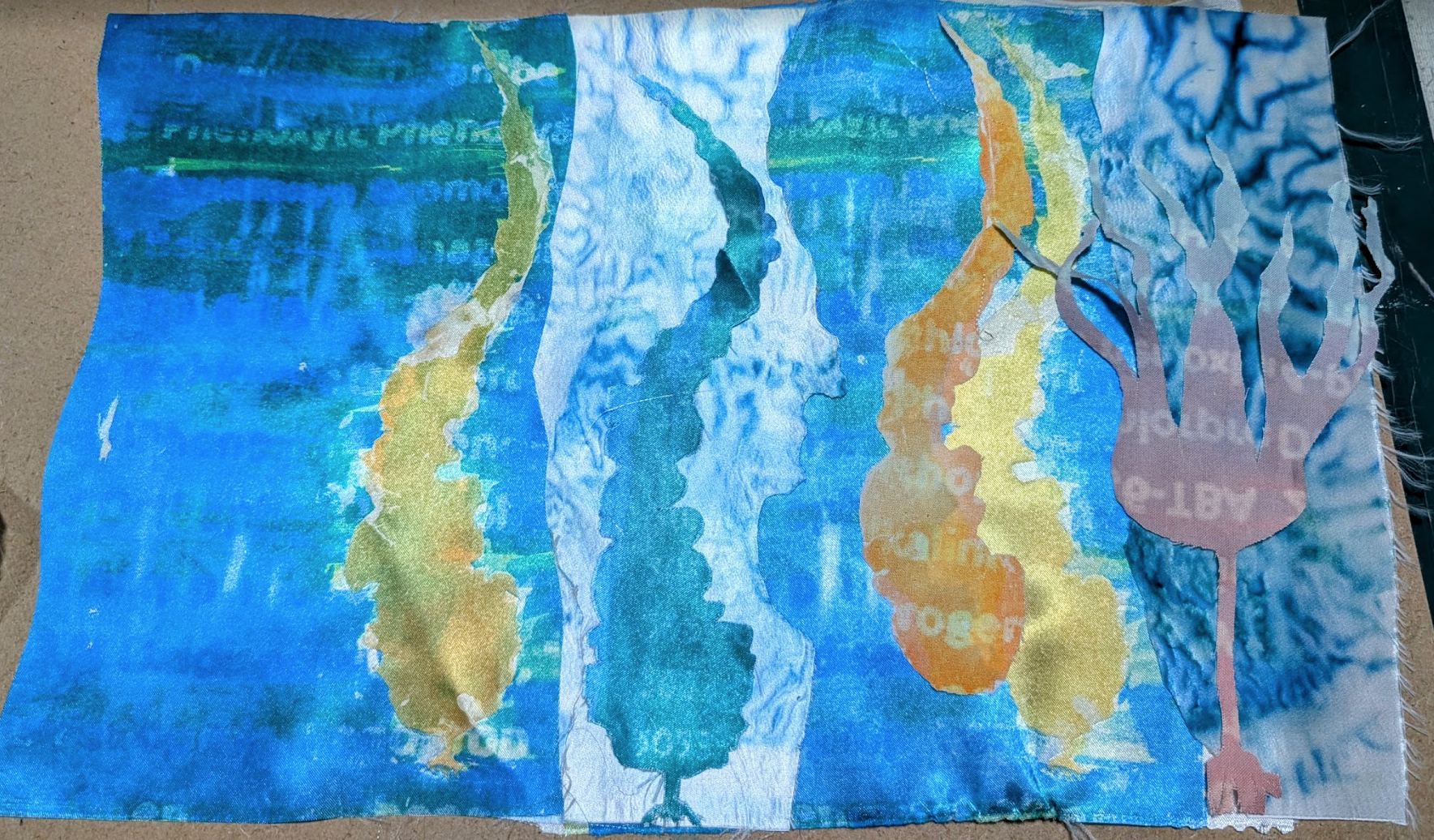
Lucinda’s project was closely connected with the research of a scientist friend, wanting to illustrate a positive story about the importance of Sussex Kelp and its potential. However, Lucinda also wanted to keep in mind a broader scale and how seaweed also captures carbon. She was “interested in showing how scientific knowledge and developing understanding is trying to improve our understanding of the effects of us”.
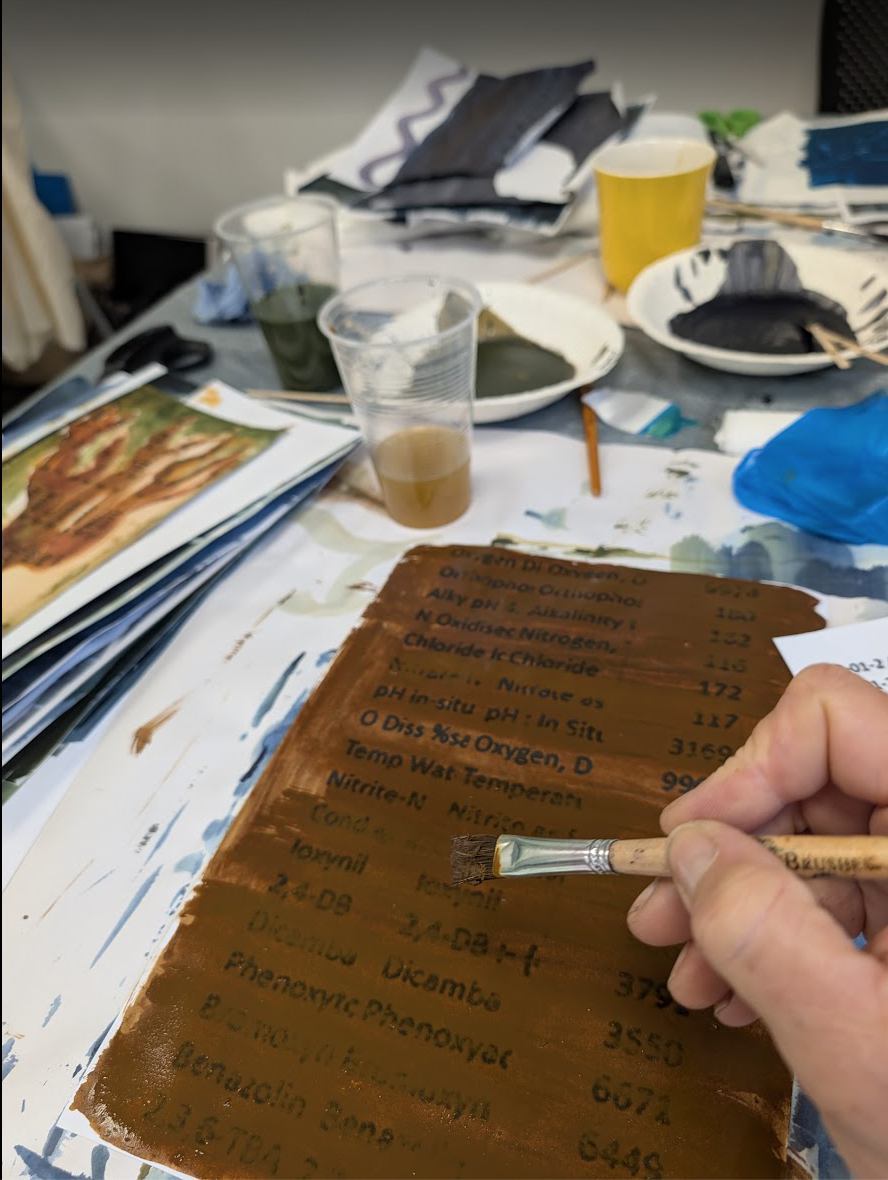
Lucinda makes textile art from recycled fabrics and found objects and one of her challenges was transferring the data text onto fabric and making it visually appealing and connected with the storytelling. She was also experimenting with gelliprinting and playing in her studio.
Lucinda took inspiration from the research, her trip to Venice and the colors of murano glass as well as thinking about what is under the water, plunging her cellphone and taking footage and looking at real kelp for inspiration. Thinking “about how the subject matter is below the surface of the sea, unseen, and yet important to the health of the planet.” While working with the fabric, the kelp, and the data, an idea for an installation started forming.
Lucinda used fabric, a shibori dying technique inspired by the idea of “columns of water being tested and analyzed” interconnected with the kelp in an installation. Her final textile kelp pieces also ended up being displayed as a column and these pieces having a conversation.

Ruby Macnab
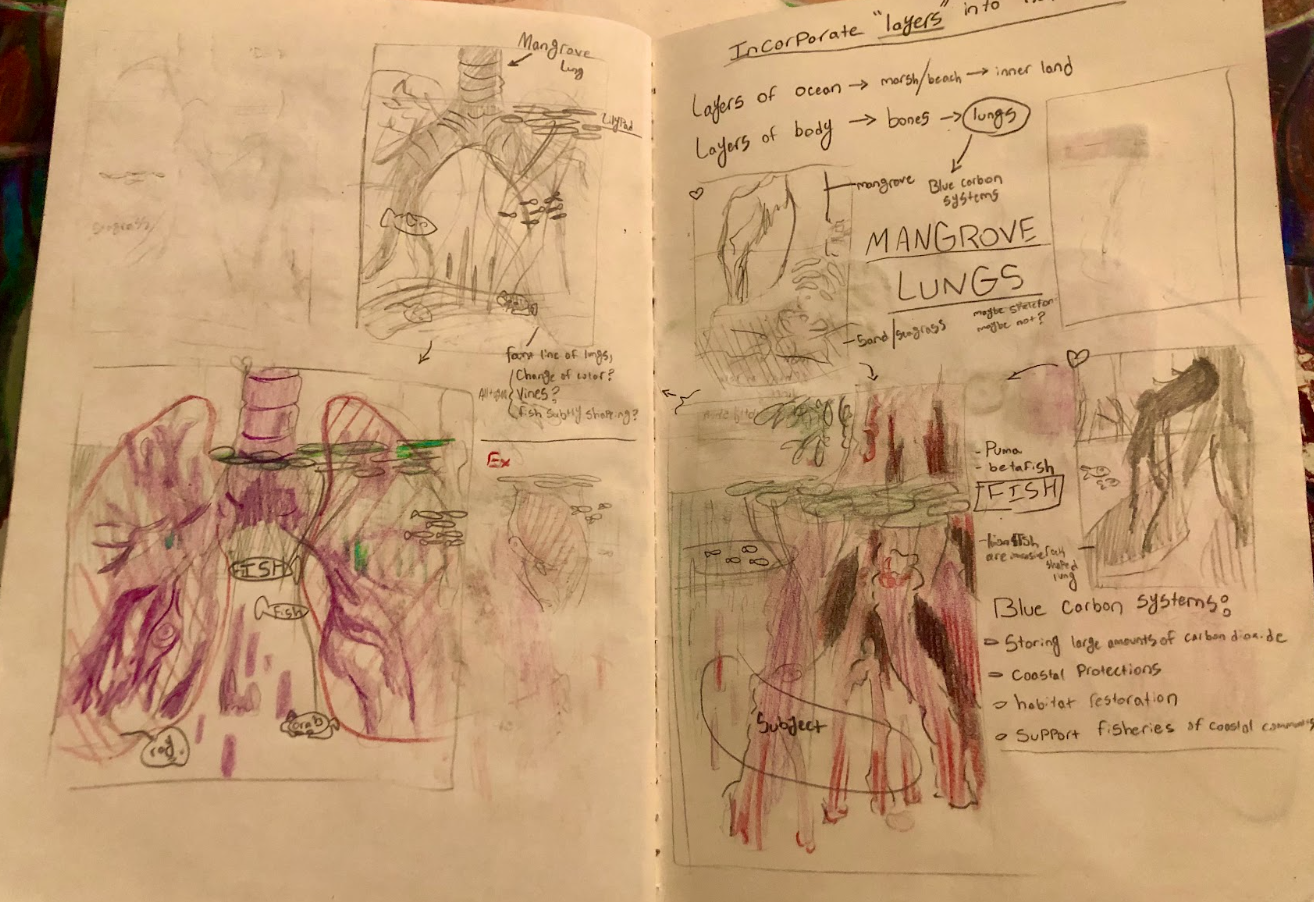
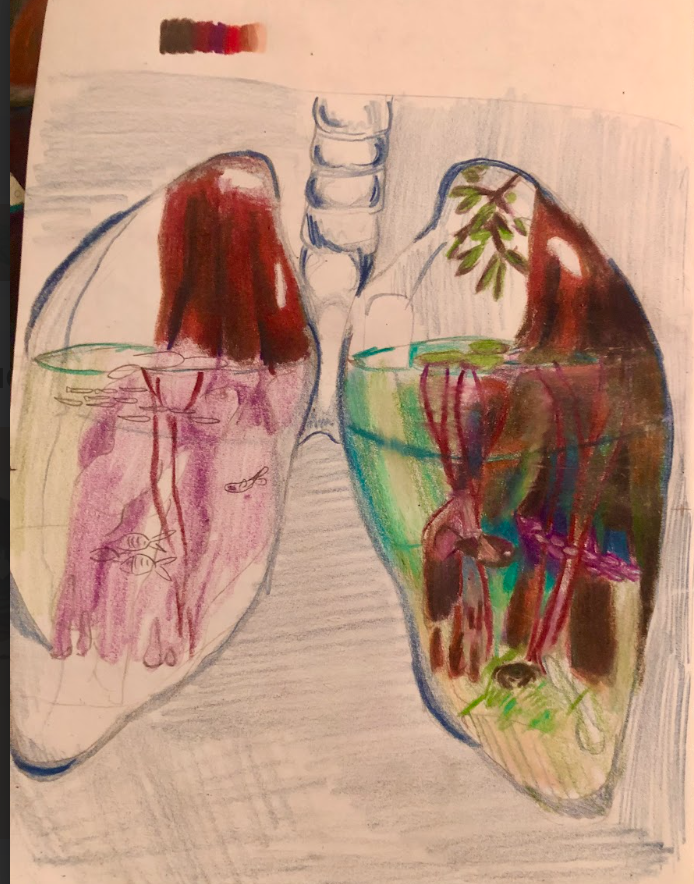
Ruby Macnab was our youngest artist to participate in the residency to date. Ruby was encouraged by her mentor to apply to the residency based on her interest of developing a “marine-themed portfolio focused on the destructive effects of human activity on the oceans’ ecosystems.” The themes she had in mind at the beginning of the residency were human factors that threatened the health of marine ecosystems like “pollution, climate change, overfishing, and habitat loss.” Her aim was to educate viewers with a sense of urgency and advocacy and motivate them to “take responsibility and pride” towards the ocean and “marine life preservation.”
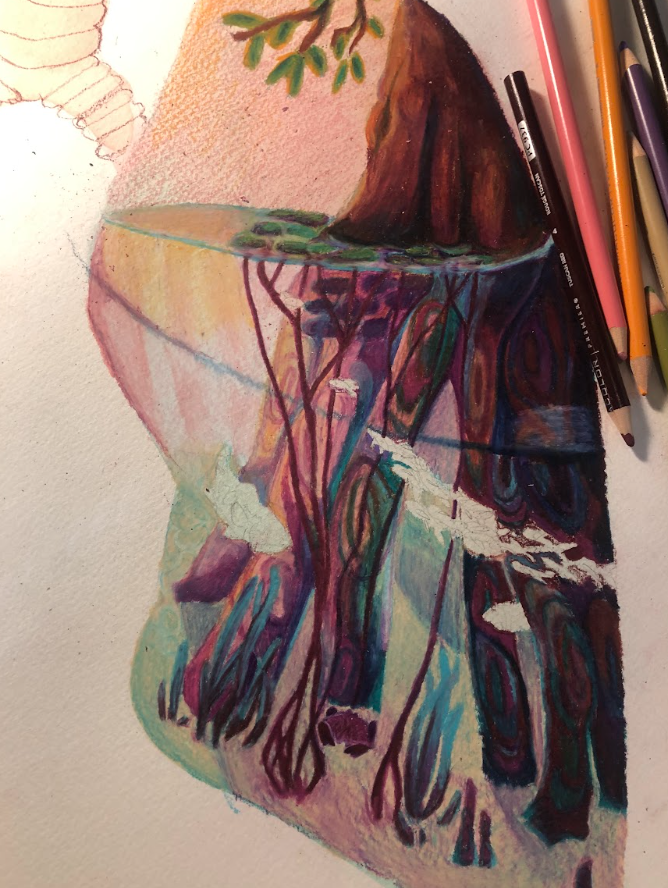
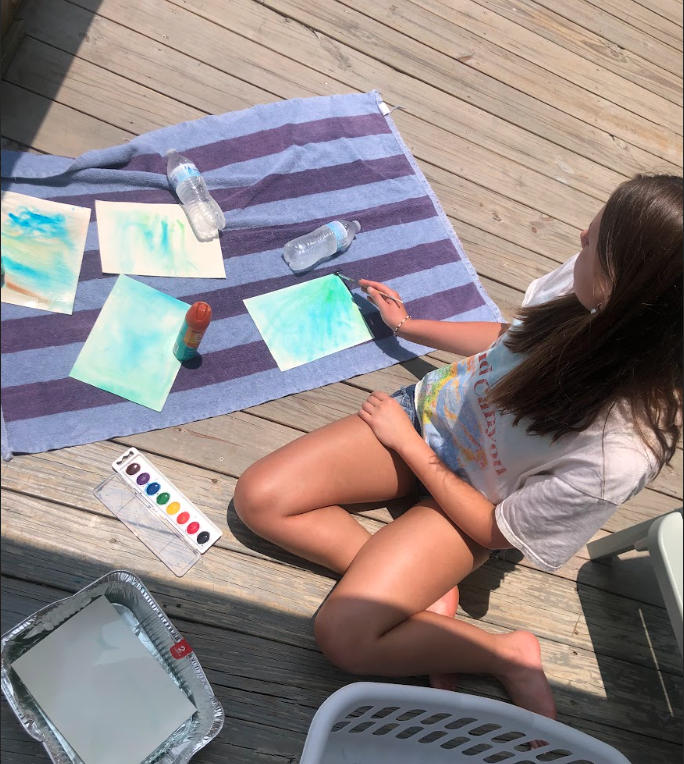
Ruby’s medium of choice is prismacolor pencils to build up layers in her work and be able to create fine details. She also worked with “watercolor washes using actual ocean water from a Texas beachside to symbolically link my pieces to the ecosystems they represent.” Although Ruby was the youngest artist, we found that she had a deep understanding of her art practice, a clear vision and was an inspiration to the other artists as a young person interested in ocean conservation and the storytelling she wanted to weave.
One of the main challenges Ruby faced was working on a larger scale without losing her desired quality and detail in her works. She wanted to create several pieces and therefore time management and size were an initial concern. Technically, her struggle and interest was representing underwater lighting accurately, which the other artists in the residency helped her figure out several solutions and gave advice.
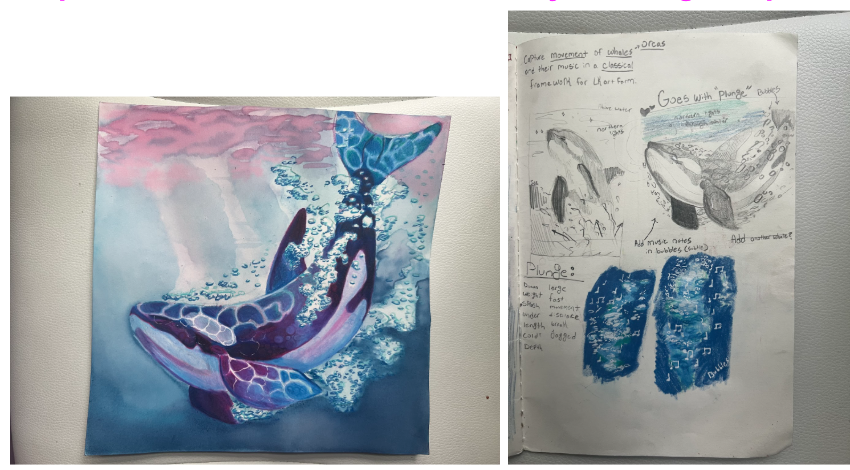
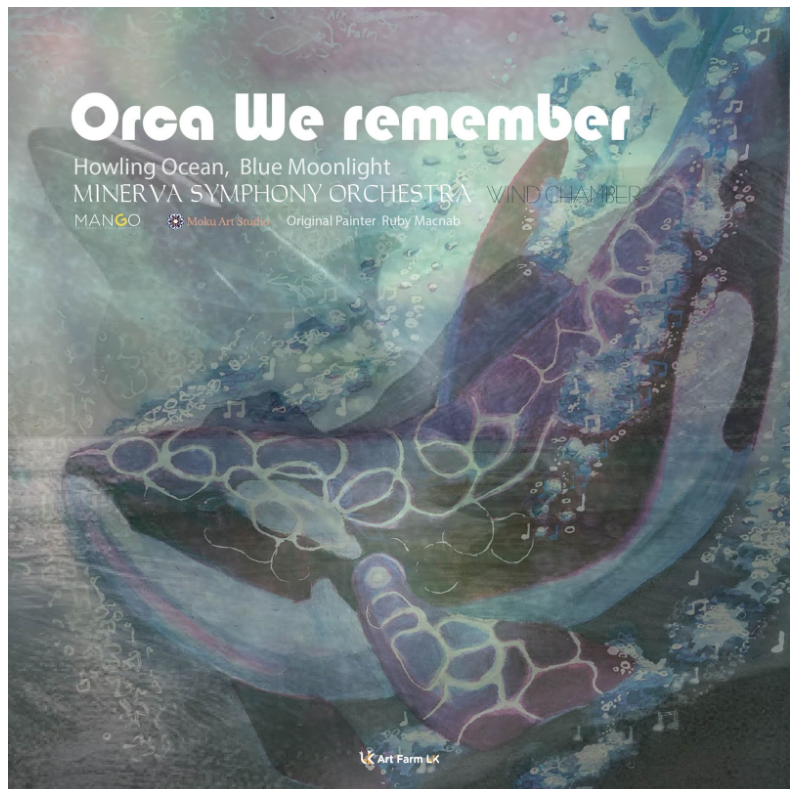
One of the collaborations that resulted from the residency was Ruby collaborating with Art Farm LK. Ruby created the album cover for their album Orca We Remember. This album was composed by a South Korean opera and symphony orchestra during the residency inspired by the ocean with the aim of raising awareness about sustainability.
Ruby was inspired by the exchange during the residency and the music that Art Farm was creating for this album. She noticed “the patterns in their music and how it seemed like the sound of the waves and melody broke that pattern” and got inspiration from that. Ruby has been credited as the artist who created the artwork for the album cover in an official capacity.
Dawn Leigh
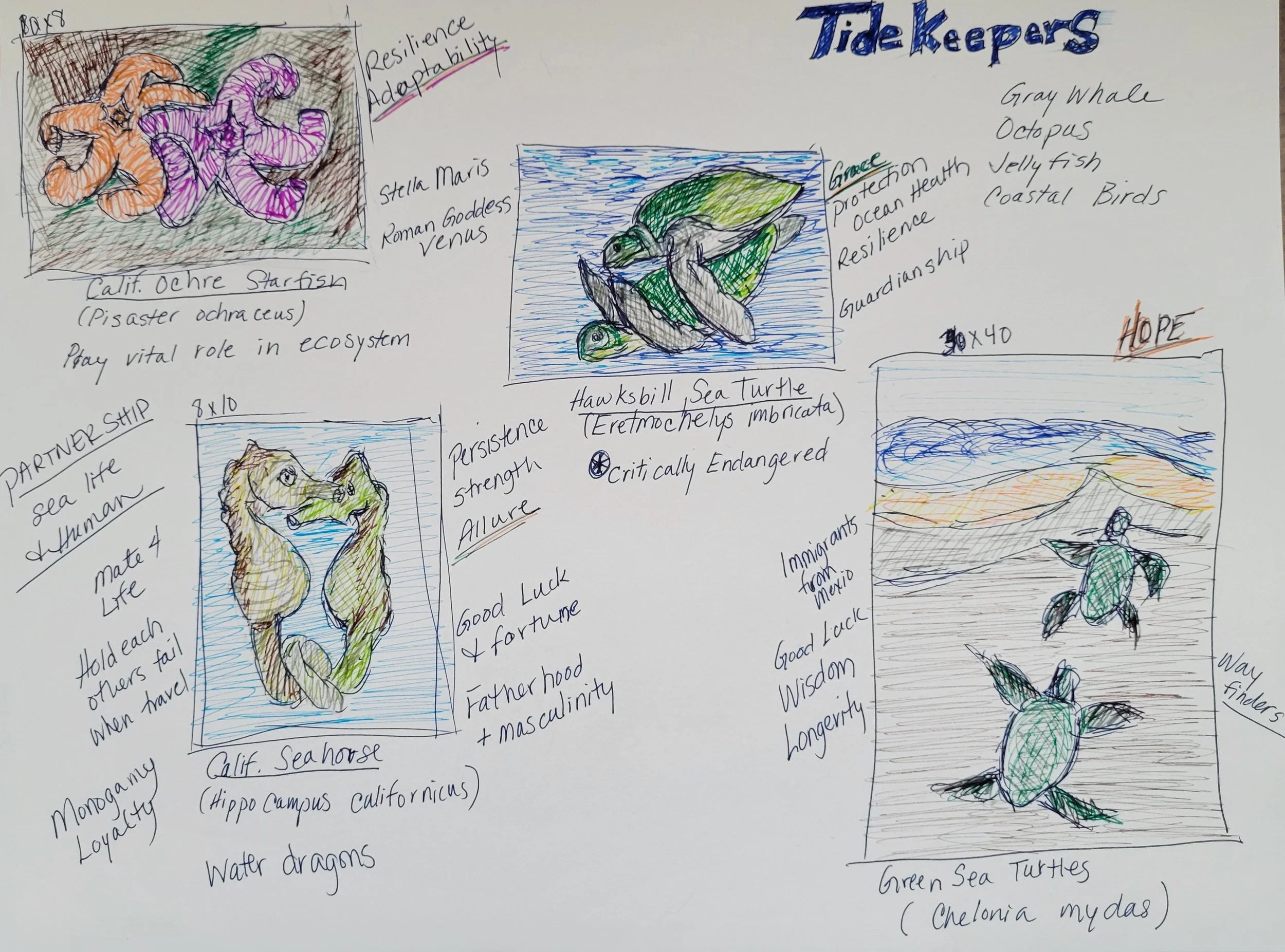
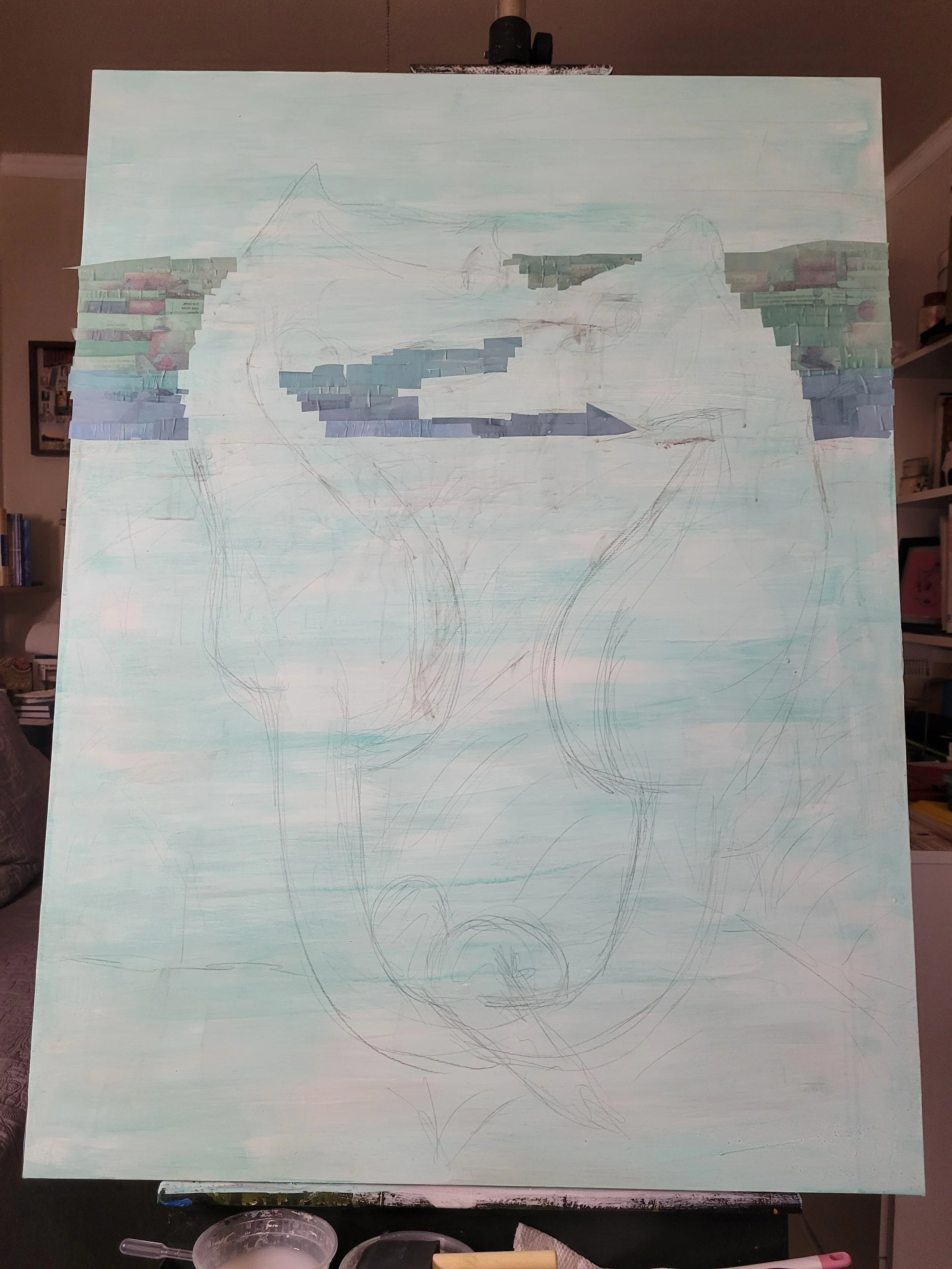
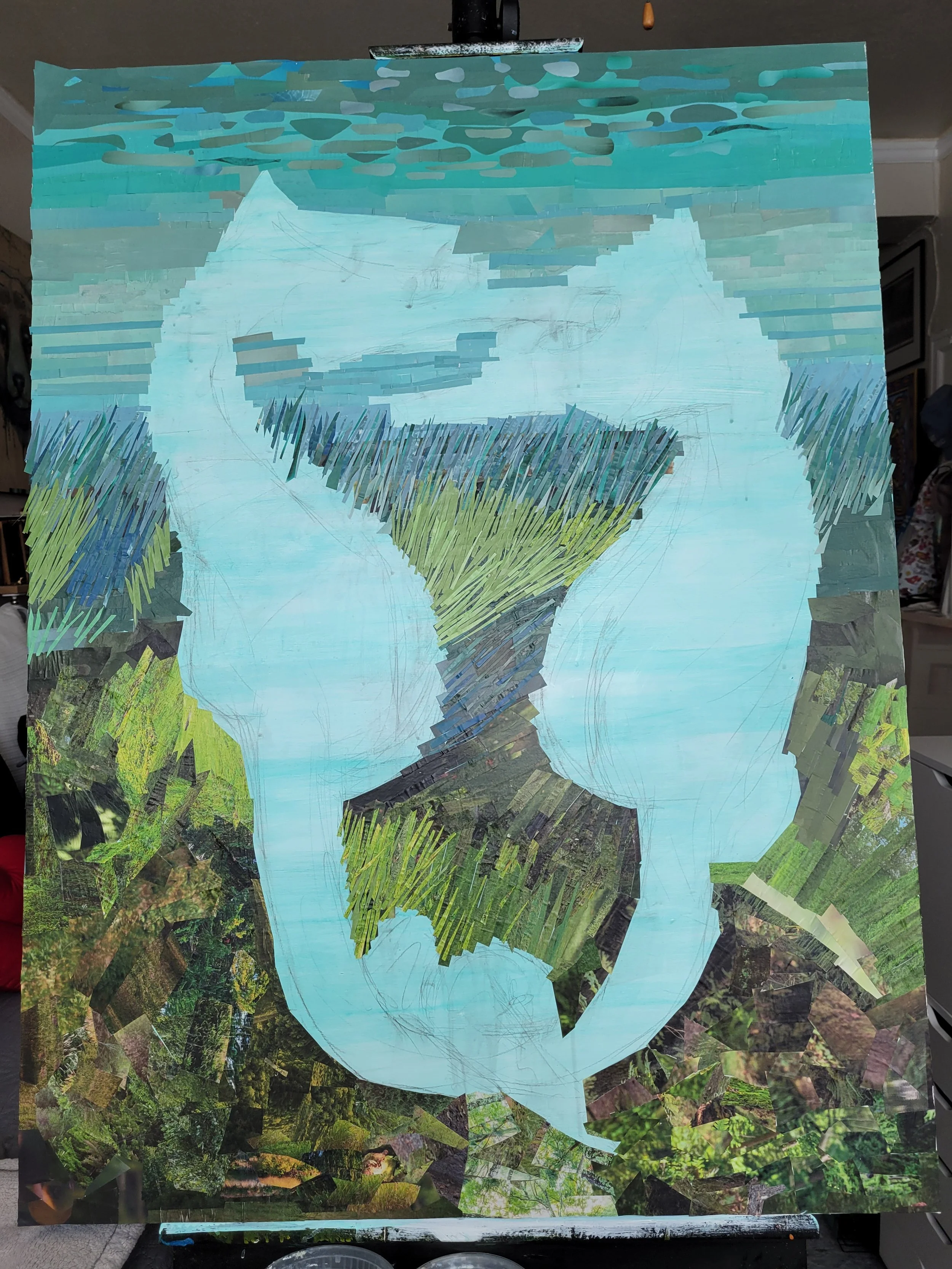
Dawn was working on a continuation of her series Tidal Keepers, a “mixed-media collage series that celebrates the beauty and resilience of the ocean through the use of reclaimed magazines and found paper.” By repurposing materials, Dawn aims to mirror the adaptive strength that marine life has to showcase when faced with climate change, pollution and human impact.
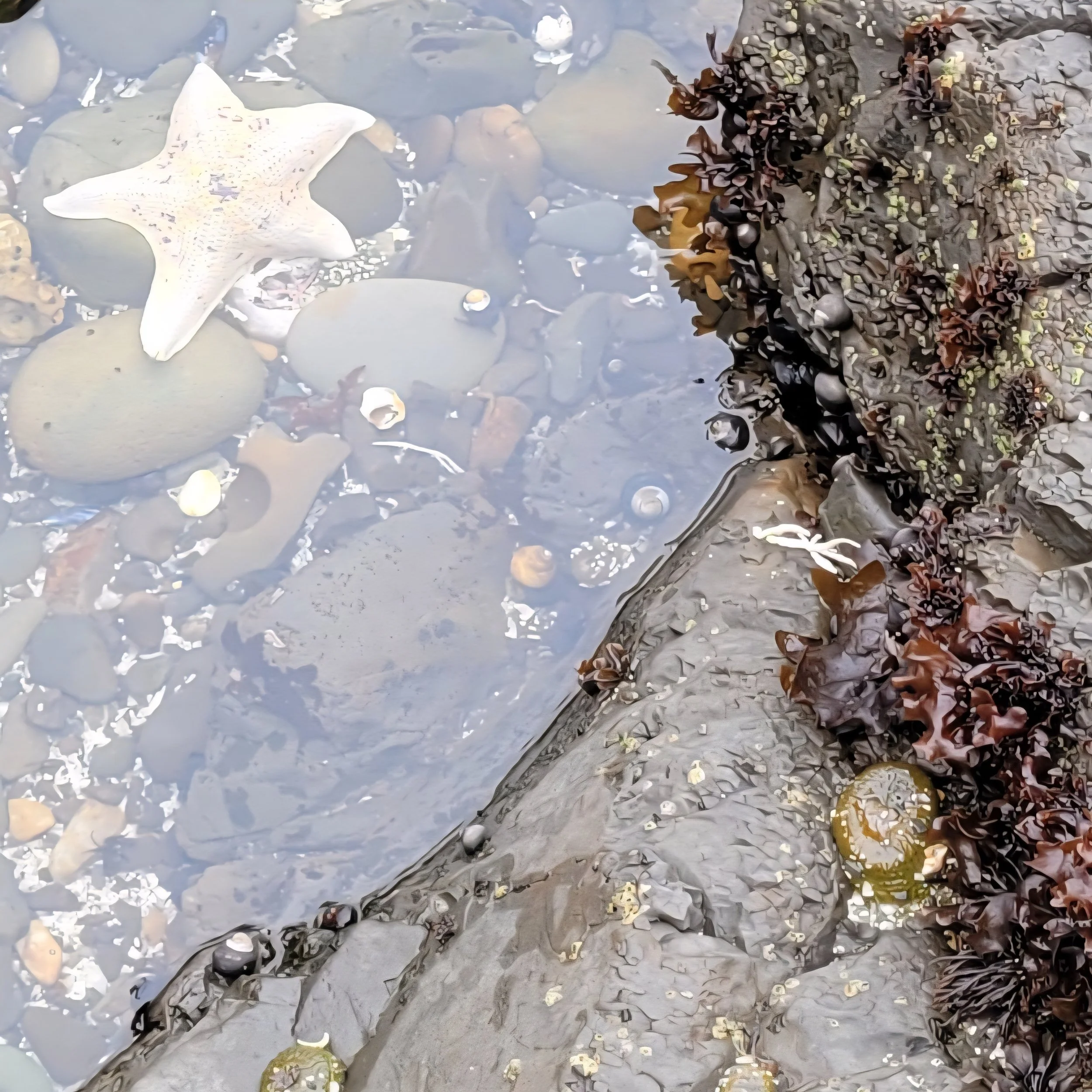
Dawn's biggest challenge during the residency was giving herself enough time to go to the studio and work uninterrupted. During the residency she decided to take a roadtrip to the beach to look at the tidepools and find inspiration for her series. She shared with us that she experienced an ache when thinking “how much we’ve taken from the ocean without giving back. The plastic debris, oil spills, and overfishing—these are symptoms of a broken relationship.” She expressed her deep grief and heartache of how humans view and see the ocean more as a resource to exploit rather than “a living entity to honor”.
This sentiment was enhanced during her tidepool visit. Dawn chose this particular beach because it was known to have baby seals, lots of animals at the tidepools and being a protected area. She was devastated to see that although there were multiple signs to not touch the animals, to not take shells away from the beach or to bring dogs into the area, there were several adults doing just that. Her horror exploded as she witnessed a woman cross the barrier to where the baby seals were, touch one and take out her phone to take a selfie with it. She was incredulous at other people’s behaviors even though the rules and regulations were clearly stated, not once, but several times at different points of the beach.
Art Farm LK
Art Farm is a collective of classical music artists, their project is an initiative to respond to the concept of “our oceans are dying.” The director and composer joined our weekly meetings and it was fascinating to see how their music was created and worked on and interpreted during the residency. As they shared with us, “they continue to ponder how the grand proposition of the ocean, its creatures and music will be expressed within classical music.”
Art Farm shared during the residency how classical music is very different from contemporary music, how it transcends time and novelty, resisting constant innovation. Unlike music consumed quickly (and arguing how it could also be forgotten as quickly) classical music fosters a deep connection with the human spirit. It poses questions about art and humanity, not offering answers but showing an ongoing search for meaning. “If music is a vast ocean, then the artist is like an organism in the ocean, giving meaning and fulfilling a function.”
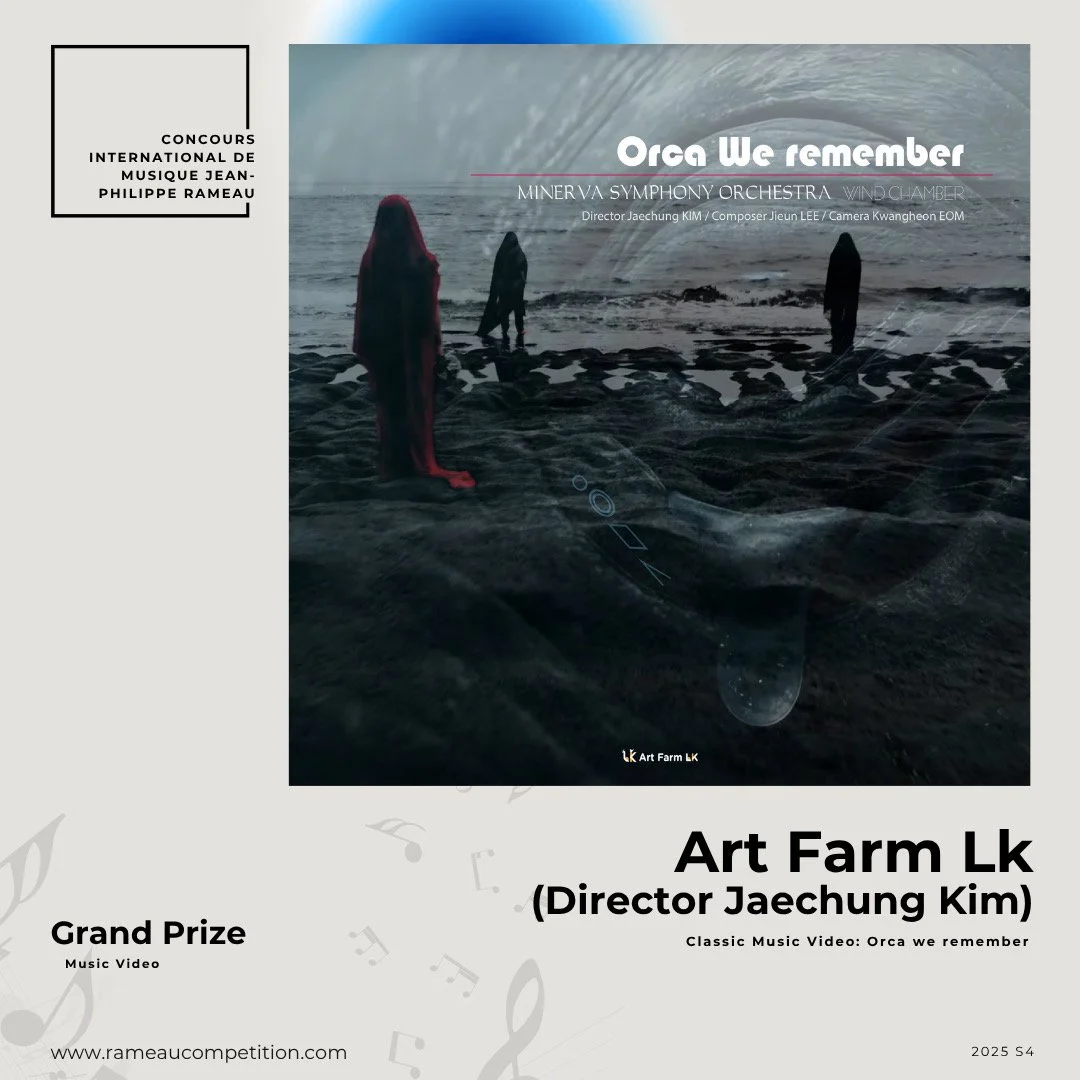
Through the meetings they composed their music inspired by the reflections and concepts that arose and scientific information. Thus, for example, the song “Orca We Remember” has as its conceptual basis the layers of the ocean.
During the residency, many artists created in their studios while listening to Art Farm’s music on their YouTube channel. Collaboration was central to this residency, and Art Farm was one of the first to embrace it. They explicitly expressed their desire to collaborate with the participating residency artists, sharing how inspired and excited they were by the opportunity.
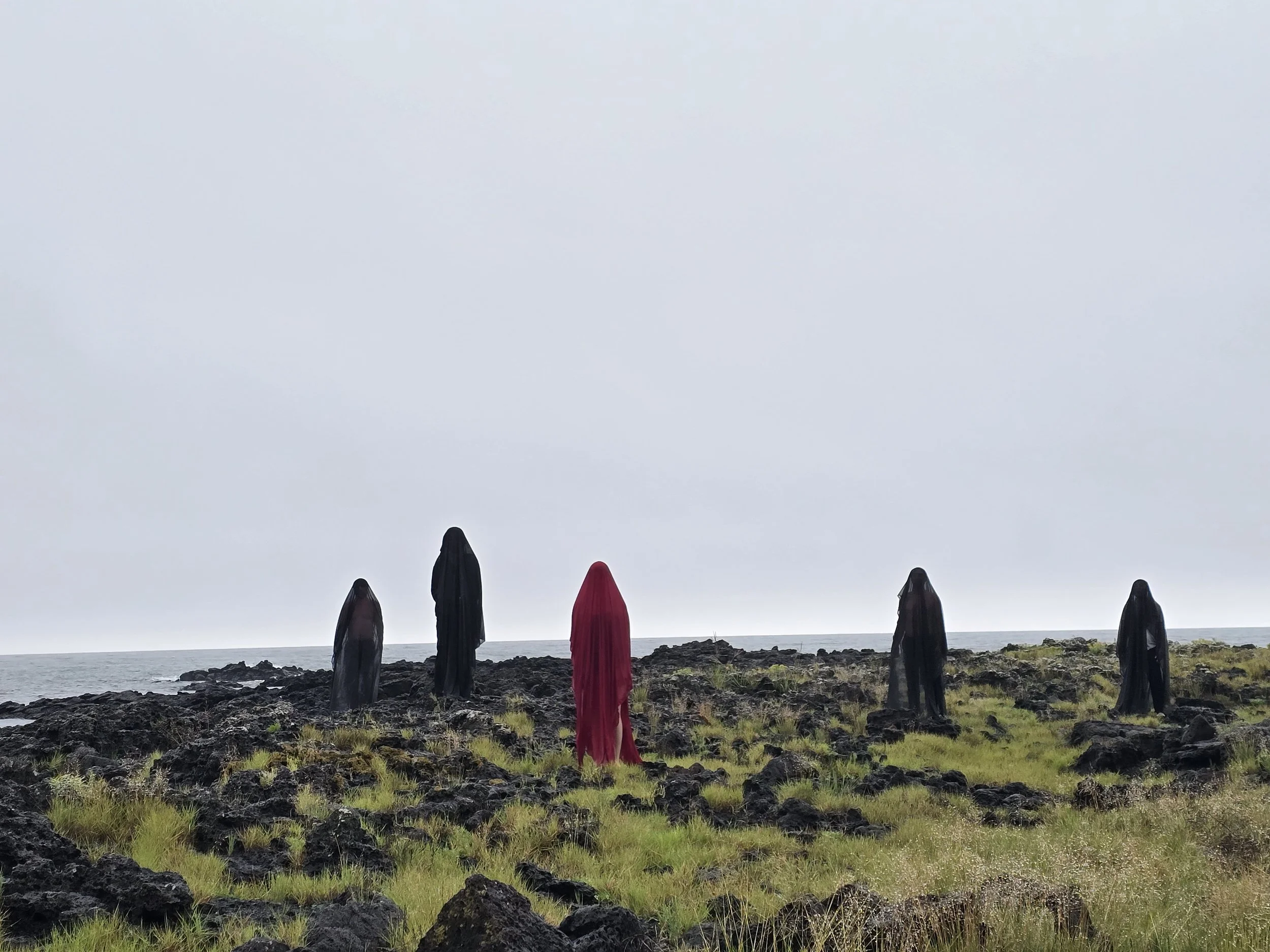
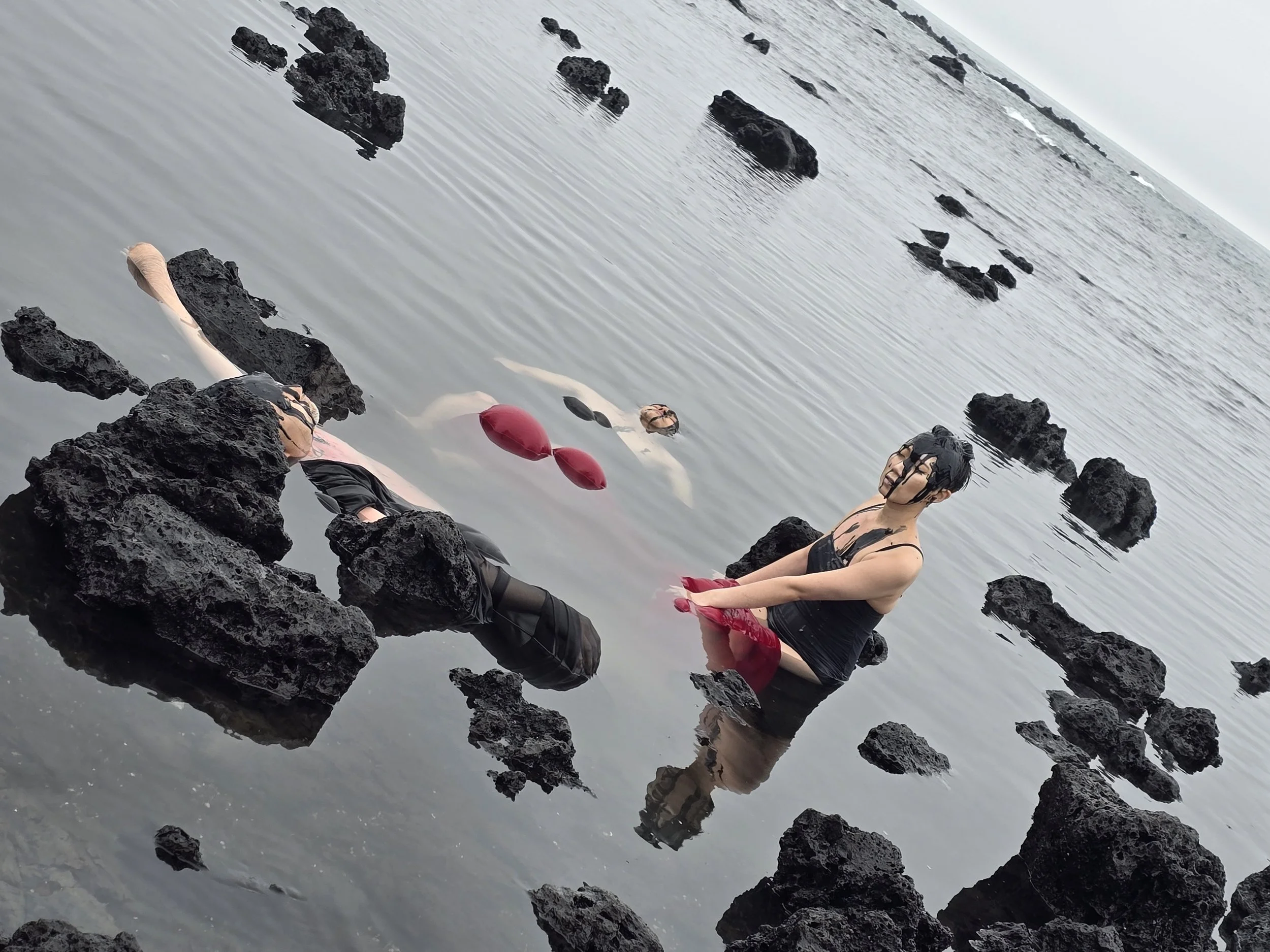
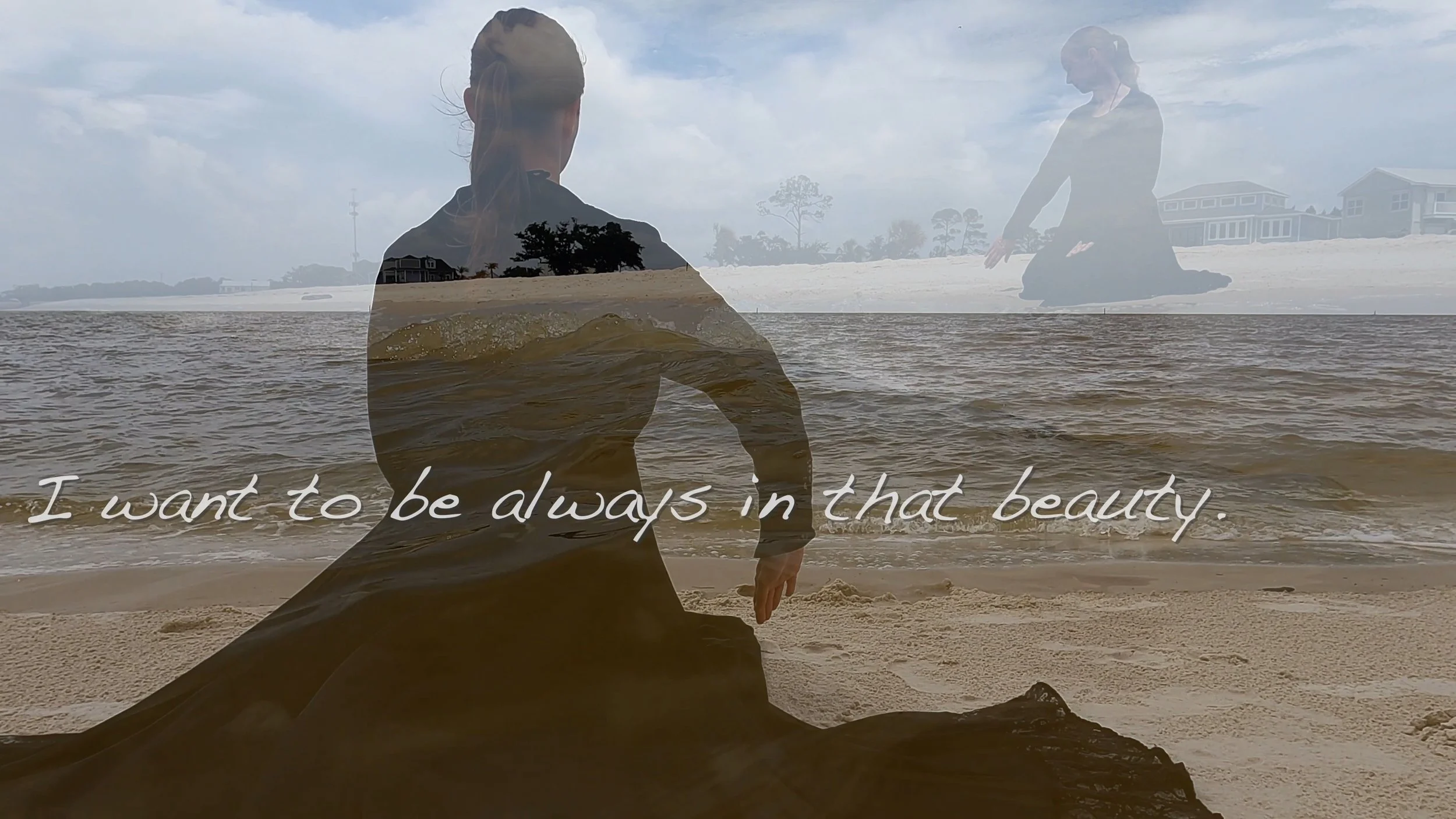
They also invited their fellow residents to collaborate and connect. Candice Salyers explored the interplay between physical and emotional movement when dancing in the sea, and participated performatively in a video clip. With Art Farm’s blessing, she brought their music into the ocean, filming herself performing in the water, footage that was later incorporated into one of Art Farm’s music videos. Another artist who collaborated was Ruby Macnab, who was inspired by the song and album title “Orca We Remember.” She created a visual artwork that ultimately became the album cover.
Jakia Fuller
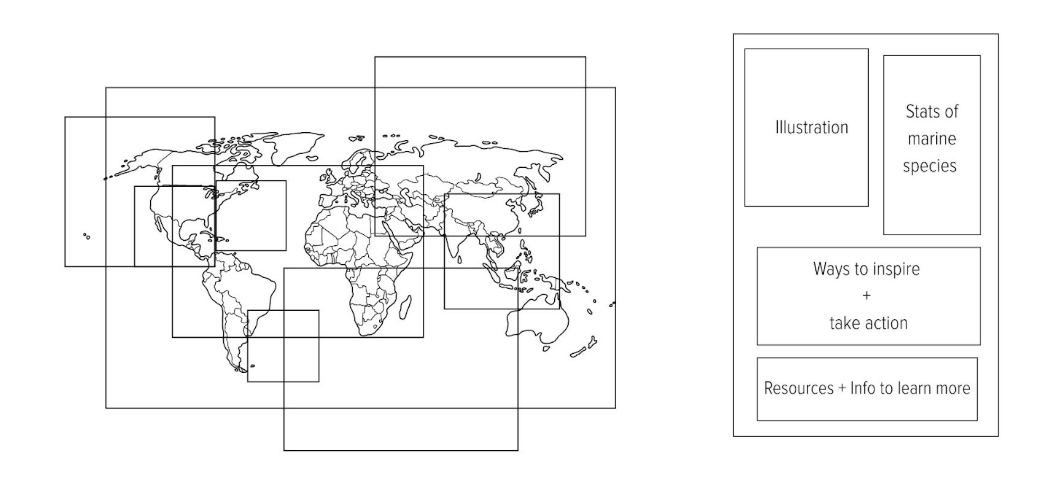
Jakia documented and explored the migratory patterns of five highly migratory marine species: the blue whale, the humpback whale, the bigeye tuna, the blue marlin, and the whale shark, using embroidery on overlapping canvases. She created a migratory map inspired by one of the keywords we worked on during the residency, “interconnectedness”, which aims to show how climate change over the last 20 years has influenced and affected their migration.
Inspired by her profession as an educator and the dialogue and exchange that arose during the residency, Jakia has created educational infographics so that the public can learn about and be inspired by the selected marine species.
Dr. Candice Salyers
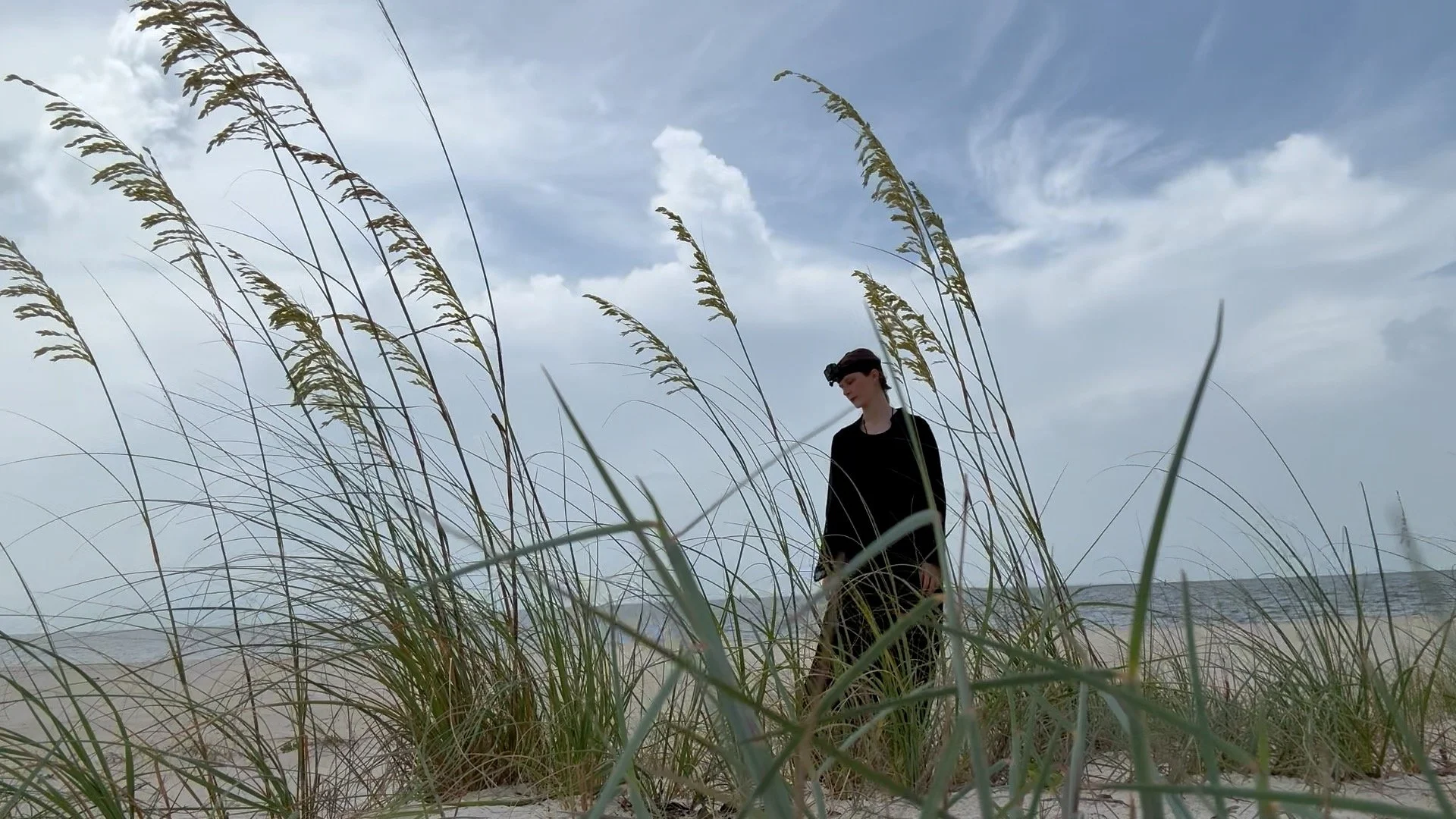
She explored the feeling of the physical-emotional movements when dancing in the sea.
She began the residency with the idea of developing a dance film, but through conversations, connections, and exchanges with other artists, she was inspired to take her project in a new direction, giving it a deeper value in terms of audience connection.
To develop the content of this dance film, she invited artists and scientists from around the world to tell her about their relationships with the ocean. Some of the questions she posed where:
What gratitude do you feel towards the ocean?
What grief do you feel when you think about the ocean?
When you consider the ocean, what are you curious about?
What prayer, hope, wish do you have for human beings and the ocean together?
In your opinion, what would a truly reciprocal, balanced relationship between human beings and the ocean be?
How has the ocean helped you become a better human being?
Instead of creating a single dance film during this residency, she made seven because she wanted to honor the hopes and prayers that people have for humanity's coexistence with the sea. In her films, she offers meditative gestures that invite the audience to slow down in order to achieve a deeper connection.
Opportunities also arose to collaborate with Art Farm LK and Kelly Perez, fellow residents.
Kelly Perez
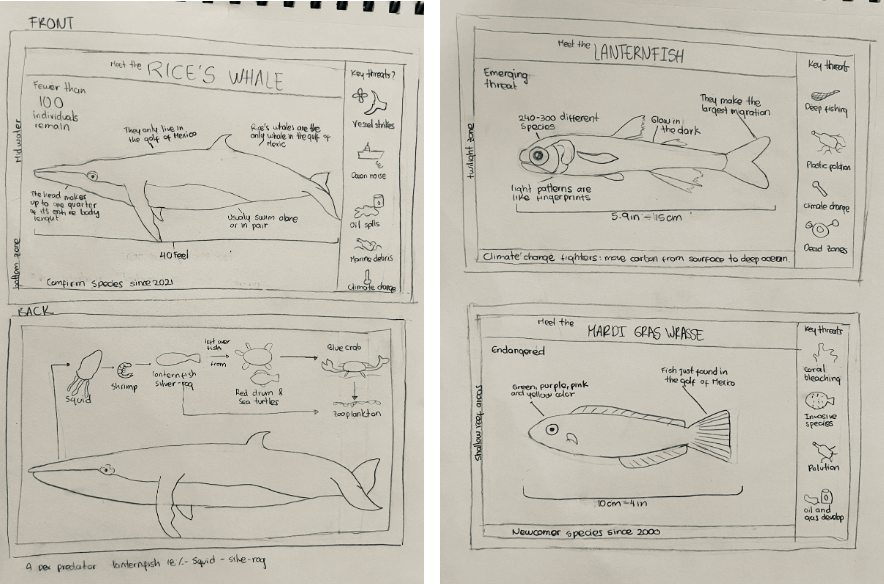
Her work is part of a project focused on marine animals that are currently endangered in the Gulf of Mexico. Through pointillism and illustration, she explores the balance between the beauty of marine life and its growing vulnerability due to climate change, pollution, and human interference. Creatures such as whales, sea turtles, and lanternfish are the central figures in this work.
She developed and created infographics with information about the importance of each species based on scientific research. Her intention is to engage participants in a creative and explicit way.
Interaction with the public is an essential part of her project. After learning facts about the species depicted she invited viewers to contribute to the background of the painting. These collaborative layers become part of her final composition, making her painting a portrait of marine species and also a visual archive of human empathy and reflection.
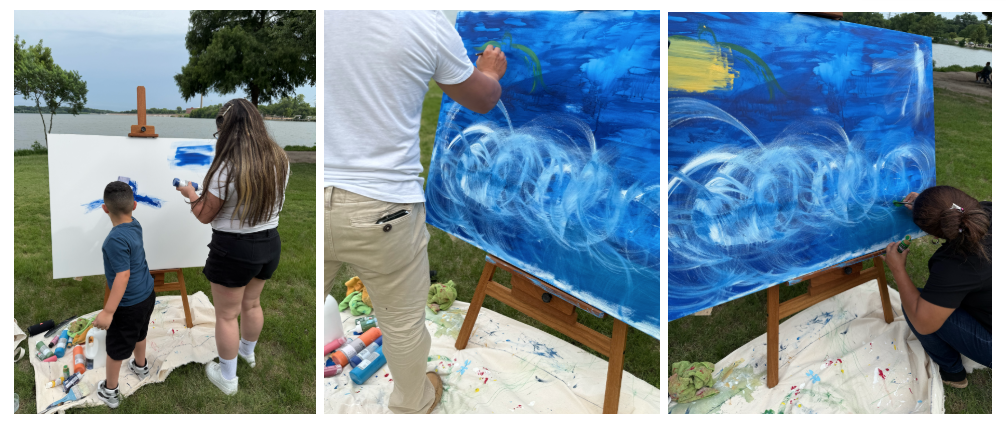
Inspired by what these artists created? Our Ocean Virtual Art Residency open call is now open — we'd love to see your work.
Ocean III Open Studio
At the conclusion of the Ocean Virtual Art Residency, we host a virtual exhibition and open studio event to showcase the projects developed by each participating artist. This culminating moment celebrates the creative journey and highlights the unique ways each artist has engaged with the ocean as both subject and inspiration. You can watch the recording of our Ocean III Open Studio below.