Ocean Virtual Art Residency
The Ocean Virtual Art Residency program, in collaboration with MANGO, empowers artists to embark on a journey of developing new projects centered around the residency's thematic focus: OCEAN. This residency aims to provide dedicated time and space for artists interested in ocean science, whether emerging or established, and to cultivate a collaborative community where like-minded artists can connect and create together.
The OVAR residency creates a welcoming, empowering, and challenging virtual space for artists. Over 5 weeks, participants met weekly to discuss ideas, critique concepts, and share resources and knowledge, fostering mutual support and project enhancement.
We are thrilled to showcase the projects developed by each artist during the residency. Through the power of art and the brilliance of these artists, prepare to be transported, inspired, and spurred to ignite your passion for our Ocean and their future.
Why a map?
We intentionally chose to present the participating artists using a map format. This decision was driven by our desire to visually highlight the global interconnectedness symbolized by our oceans. By mapping the artists, we aim to emphasize how, regardless of location, we all share a deep love and concern for our planet's waters. This spatial representation underscores our planet's interconnectedness and the collective efforts of artists to draw inspiration from the ocean and, through their work, inspire others.

Ocean Virtual Art Residency has been endorsed as an Ocean Decade activity. This means that our virtual exhibition will be shared on the Ocean Decade Network, allowing the wonderful work created by the artists to reach a wider audience.
Ocean VII Virtual Exhibition
We recommend viewing the map on a desktop. If you would like to see the map bigger, just click on the top right square. Every artist is placed on the map with a colored marker. When you click on the marker, you will see a window to the left of your screen with the name of the artist, their piece, the artist’s statement about their work, and a link to their website. Please click on the images so you can see the full image or video. If the artist has several pieces in the exhibition, you can scroll through them using the arrows.
Please use this FORM to give feedback and your thoughts to the artists.
Open Studio
Participating Artists
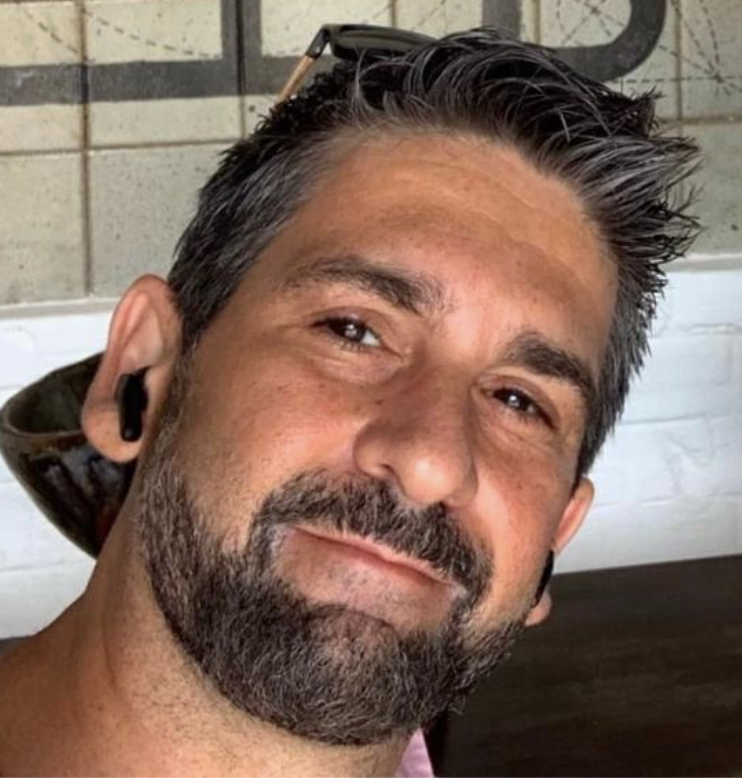
Ovatsug Figueiredo [Rio de Janeiro, 1977] is a Brazilian visual artist whose practice moves across expanded painting, material construction, and critical research. Developed continuously since 2006, his work investigates painting as a physical and temporal system in which matter, color, gravity, accumulation, and instability participate actively in the formation of the work.
His artistic training includes the Escola de Artes Visuais do Parque Lage, in Rio de Janeiro, where he studied drawing, painting, printmaking, contemporary art theory, and advanced painting, and the Escola Massana, in Barcelona, where he pursued studies in abstract painting and advanced seminars on art, creativity, and identity. He has also participated in research programs on contemporary, Brazilian, and Latin American art, as well as art and politics, through Uncool Artists in New York and Zait_Art in Berlin.
Alongside his studio practice, Figueiredo has developed an extensive academic trajectory across education, psychology, and cultural studies. He holds undergraduate degrees in Health Sciences and a Master's degrees in Education, both from the Federal University of Rio de Janeiro, a doctorate in Psychology from the Universitat Autònoma de Barcelona, and recently completed a postdoctoral research in Cultural Studies at McMaster University, Canada. This interdisciplinary formation informs, without determining, an artistic practice concerned with material systems, contemporary culture, ecological vulnerability, memory, and the conditions under which human sensitivity persists under pressure.
The artist defines his material research through the concept of Pictorial Edification, in which painting ceases to operate primarily as a representational surface and becomes a constructed physical body: an unstable topography shaped by successive processes of accumulation, sedimentation, compression, erosion, and collapse. Working with mortar, plaster, alkyd resins, oils, silicates, industrial and mineral pigments, quartz sediments, epoxy foam, plastics, found objects, and other materials, he produces paintings, pictorial objects, and sculptures in which weight, viscosity, curing time, gravity, fracture, and chemical transformation become constitutive elements of form.
His recent bodies of work include Pandemic Memory (2022–2024), Mental Health Stigmas (2024–2025), and S.O.S. Oceans (2012–2026), which connect material experimentation with questions of collective memory, psychological vulnerability, ecological crisis, territory, and systems under pressure.
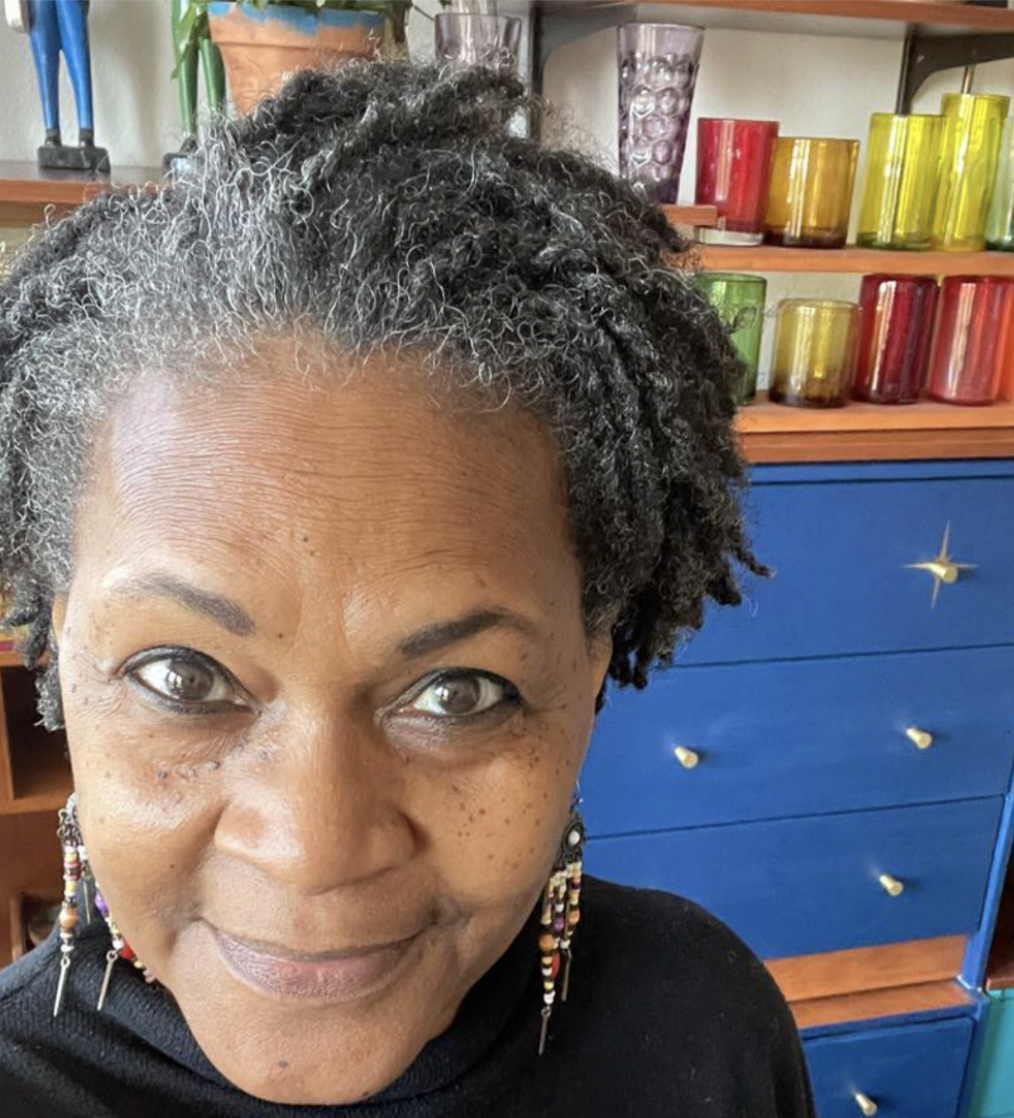
Kweli Kitwana is a mixed-media artist whose work explores the relationship between memory, material, and belonging. Working with cyanotype, collage, botanical pigments, printmaking, painting, fiber, and reclaimed photographs, she creates work that honors overlooked histories while imagining possibilities for remembrance, repair, and liberation. Kitwana approaches materials as collaborators, allowing sunlight, plants, natural pigments, found papers, and photographs to carry their own histories into the work. A late-life artist following decades devoted to community organizing and leadership development, her evolving practice is grounded in curiosity, experimentation, continual learning, and careful listening to what materials and memory reveal.
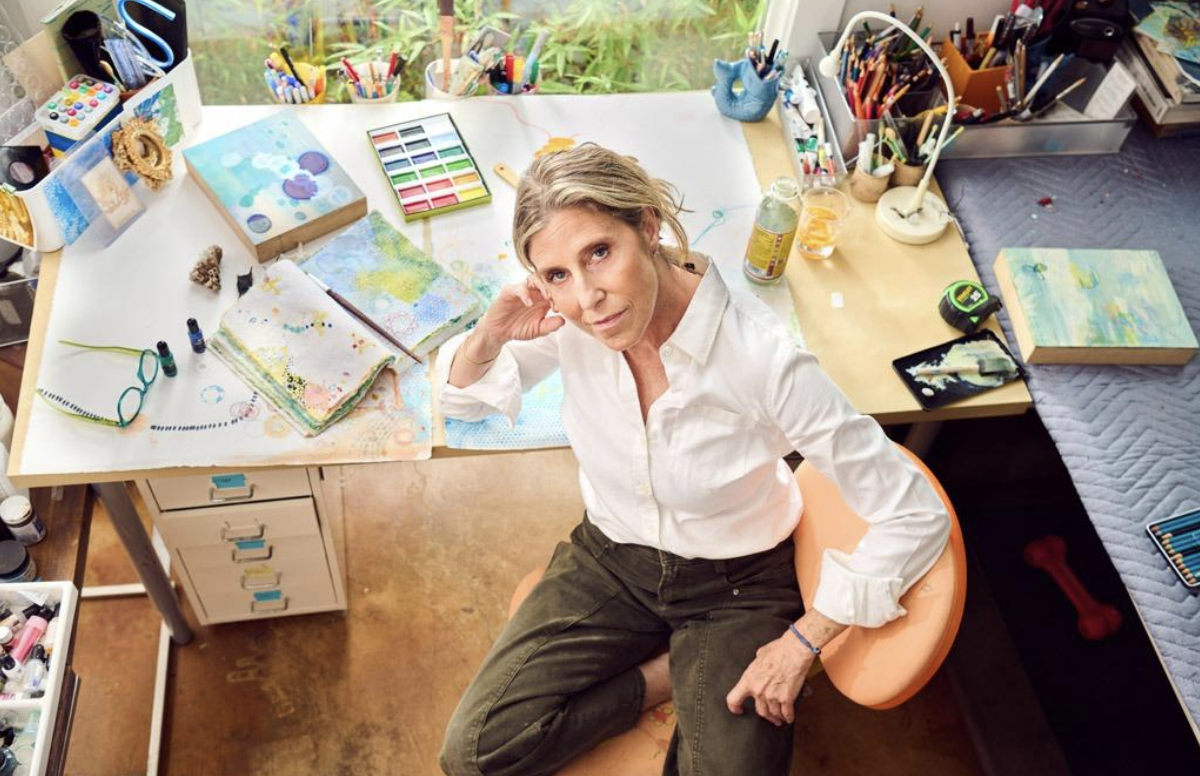
Dana Montlack is an Interdisciplinary Biospheric Artist, researcher and educator utilizing her decades-long exploration of natural elements to bridge the worlds of art and science through a unique style of layered imagery centering on the environment. Her groundbreaking work has been exhibited in museums and galleries worldwide, as well as featured in both private and public spaces, including the Whitney Marine Biology Research Center; Atlantis The Palm, Dubai; Scripps Memorial Hospital and the Museum of Contemporary Art in San Diego.
With her unique vision and process, Dana is a leader in the area of mixed media montage. She uses photography, drawing, maps, and scientific data in a form of composite artistry that has defied conventional artistic categories, creating innovative techniques that bring together new and traditional technologies. Her work explores and presents different topics in the environment through layered composite imagery, using microscopes and scanners to capture images that are not easily seen by the naked eye, to showcase the natural world and the role humans play in it.
Through the decades, Dana’s work has been embraced by both the art and scientific communities where, in addition to being featured in museums and galleries around the globe, she had the honor of working with esteemed scientists from Scripps Institution of Oceanography and other leading organizations.
In 2022, Dana was awarded a Marine Extension and Georgia Sea Grant from the University of Georgia, which was funded by the National Oceanic and Atmospheric Administration (NOAA), where she visually explored the impacts of a changing climate on the Georgia coast – with her resulting photographic art showcased during the summer of 2023 at the University of Columbus - ILLGES Gallery. In 2026, she was awarded the grant a second time to support the development of her large-scale, interactive installation investigating coastal ecologies on the microscopic level.
In addition to her work as an artist, Dana teaches Visual Arts and Contemporary Art History at Georgia State University. She received a Bachelor of Fine Arts from the University of California Santa Cruz and her Master of Fine Arts in Mixed Media from Otis Parsons School of Art and Design, and she is an active member of a number of professional organizations, including Art Table Leadership, College Art Association and the Science-Art Collaboration.
Linked In
Facebook
Instagram
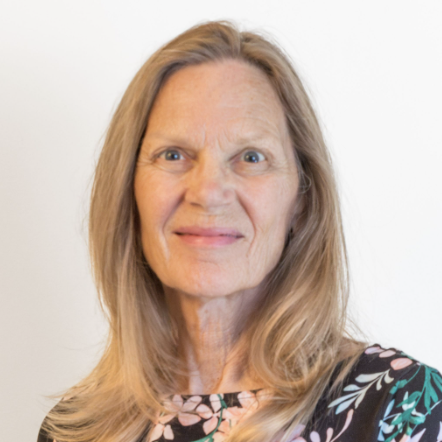
Interdisciplinary artist and photographer Lauri Hafvenstein examines the delicate interplay of light, color, and location. Her practice emerges from a distinct set of personal and professional influences—from scuba diving and dreamwork to research and color design. Rather than confining herself to a single medium, she lets each site dictate the form, creating immersive installations using print, sculpture, technology, video, and/or sound. Hafvenstein’s work prioritizes the act of discovery over the final artifact. By observing natural light and experimenting with materials that refract and transmit it, she transforms windows and architectural sites into living, shifting narratives.
“I strive to capture a moment of visual delight, when the everyday becomes, if only for an instant, something extraordinary.”
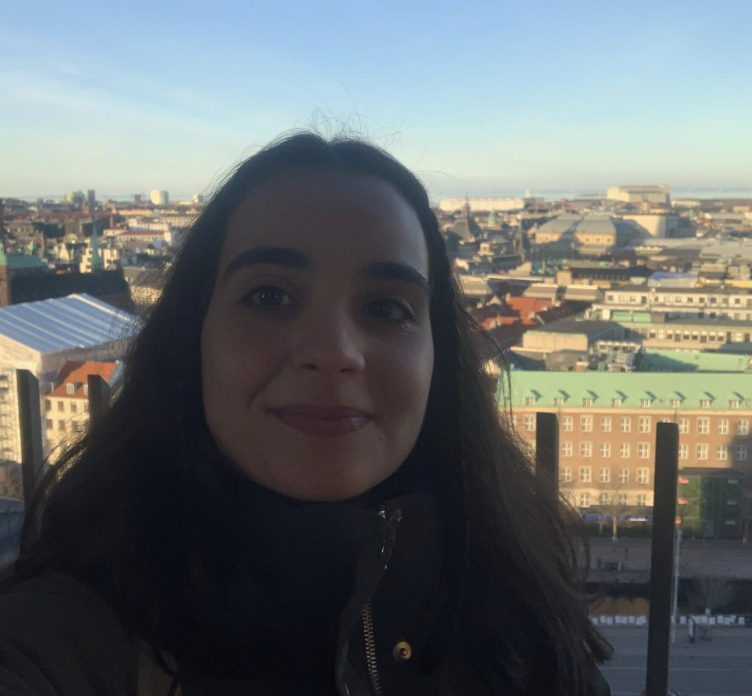
Part of Paula Santa Vicente Pérez’s name comes from her great-grandmother, whom she never met, but whom her mother loved dearly. She was born in Salamanca, and studied there until she wanted to strike out on her own and drink tea. She lived on the Emerald Isle just long enough for her family to start calling her ‘the Irish girl’. Later, she would return to her hometown. She is passionate about the sea, and every time she reaches a shoreline, it beckons her to stay. She loves the smell of salt and, living inland, finds it in popcorn and crisps. She always wears purple, a colour she identifies with and lives alongside. Paula has a twin sister who, were she to write a biography like this one, would be unable to mention anything about names, islands, seas, colours or animals. In a way, Paula writes for this very reason – to make it clear that, despite a certain physical resemblance, they are completely different. Paula studied English Literature and now she teaches to others the language which helped her to view differently the world.
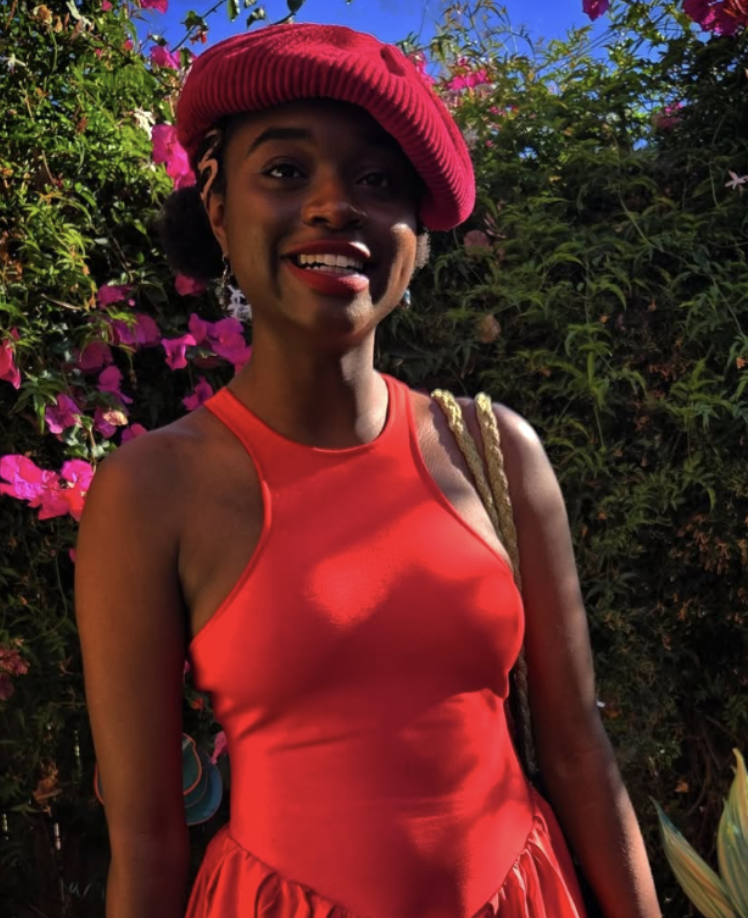
Zora taught herself stop-motion animation in 2024 and has since incorporated animation and storytelling into her broader multimedia practice. She has not taken any animation classes but hopes to soon! Her recent work explores human relationships with the natural world, including Whale Creation Story, a project that considers how we might develop relationships with species we do not fully understand.
Growing up, Zora was inspired by Black traditions, culture, and storytelling. Her family's traditions of storytelling and art shaped her artistic practice, encouraging her to approach the world with imagination, curiosity, and play. Zora's first art was an invention notebook she carried around in the 4th grade, in which she would draw inventions both silly and practical. She tries to maintain this freeness of invention and imagination through art, visulizing peoples ideas/whims/thoughs to the best of her ability.
Currently, Zora is developing an understanding of materials as carriers of memory and history. Her interdisciplinary background in social science informs a practice rooted in research, observation, and storytelling. She often begins with an overlooked story, social question, or encounter with the natural world and transforms it through speculative narratives, myth, humor, and material experimentation. Her work considers how people build relationships with one another, other species, and the environments they inhabit.