Interview with illustration artist and student Ruby Macnab
Ruby Macnab participated in the 2025 Ocean III Virtual Art Residency and is the youngest artist to have taken part in our Ocean program to date. From the moment we read her application, we were struck by her thoughtfulness, her dedication to her practice, and her sincere curiosity about the ocean and artivism. With her parents’ consent, we welcomed Ruby into the residency and watched her grow through the exchange with other artists. Although young people are often underestimated, her presence and perspective resonated deeply, leaving a lasting impression on every participant in the residency.
Tell us a little about yourself and your art
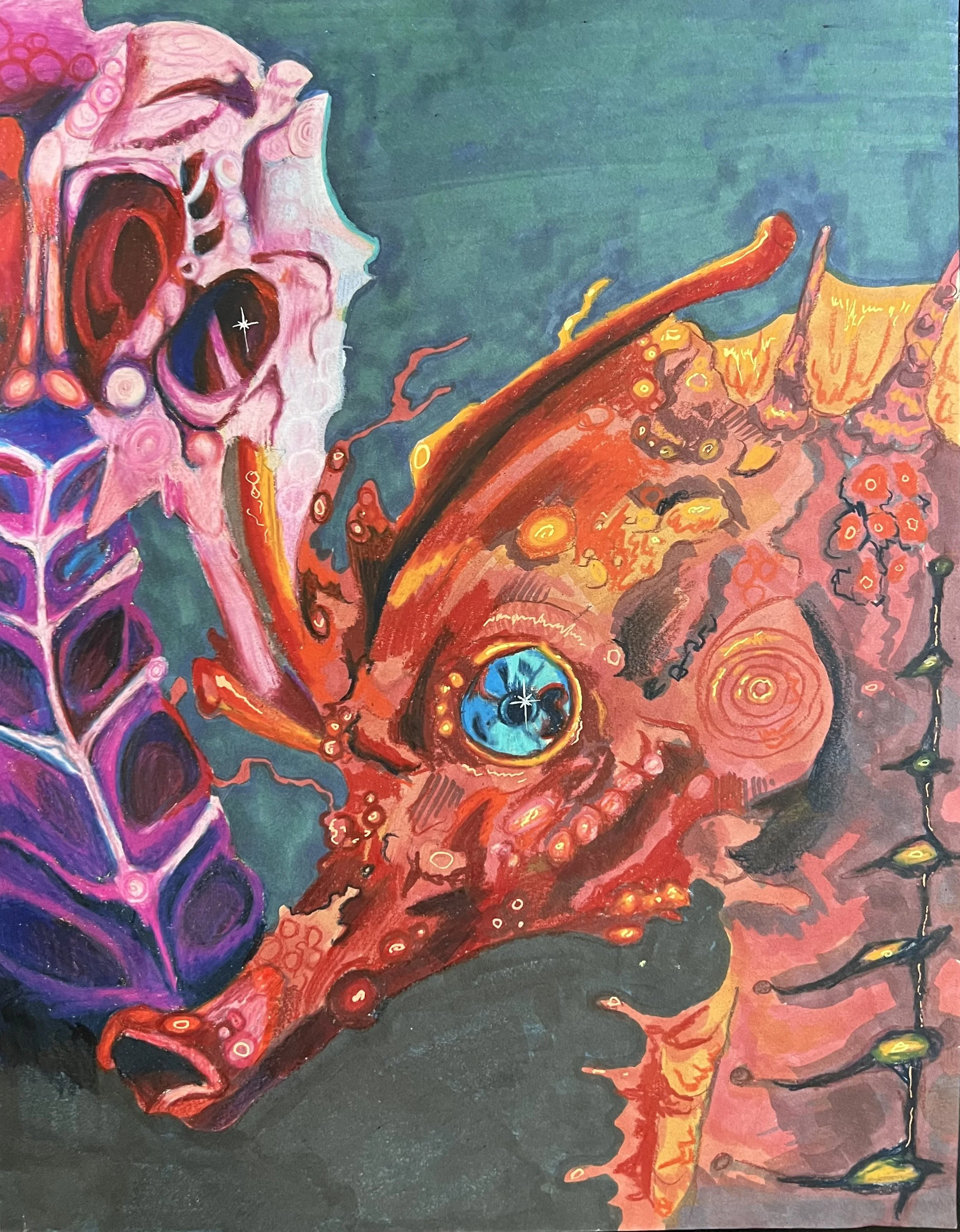
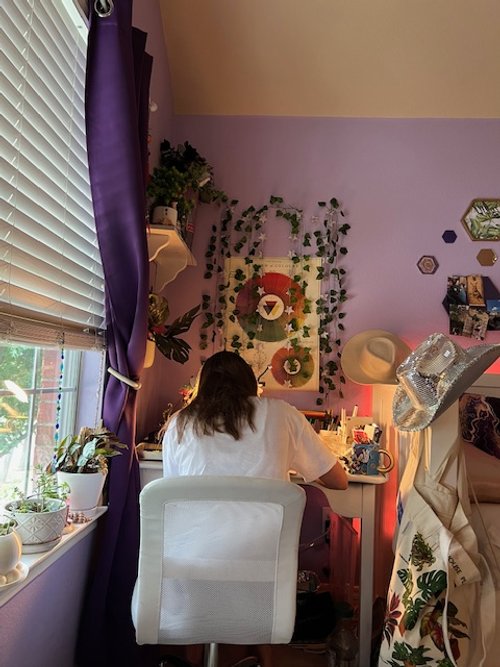
I was born in London, England, but have spent most of my life in Dallas/Fort Worth, Texas. I'm a high school art student and illustration artist working primarily with Prismacolor pencils on surrealist drawings of landscapes, animals and people. In college, I plan to major in art, and minor in biology. My art portfolio explores the human relationship with Oceans, and how art imagines a better future for the flora and fauna of our World's waters. When I'm not drawing, I enjoy tending to my windowsill plants, playing volleyball, baking sweet treats, going for boba with friends, traveling, browsing art festivals, and playing with my black cat, Lucky.
What sparked your fascination with the ocean?
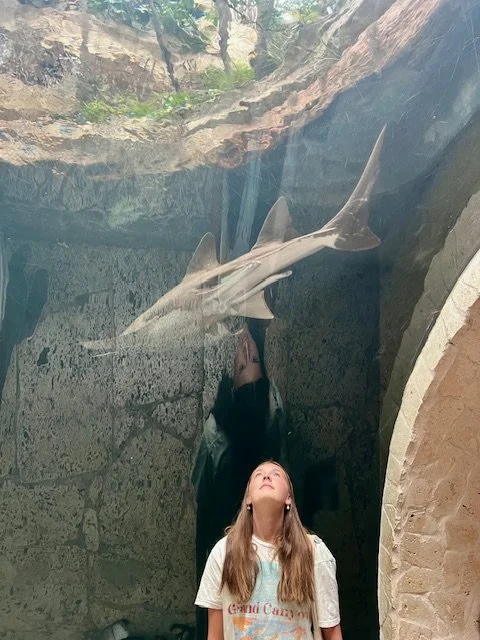
I have always loved being near the water, visiting beaches, and swimming. During summers we have traveled to beaches on the Texas coast, the Florida Panhandle, Washington State, California and Southern Maine. A few years ago we took a family trip to Cozumel, Mexico where I had the opportunity to snorkel and swim with sea turtles! I enjoy visiting aquariums, studying the anatomy of aquatic creatures, and learning about marine environments.
Can you walk me through your creative process from concept to completion?
1. I gather inspiration from things I see, learn, and what I'm curious about. These could be pictures I have taken myself, some I see online, or experiences I have had. I try to think of what ideas I am trying to convey in my art and blend the visual with the message.
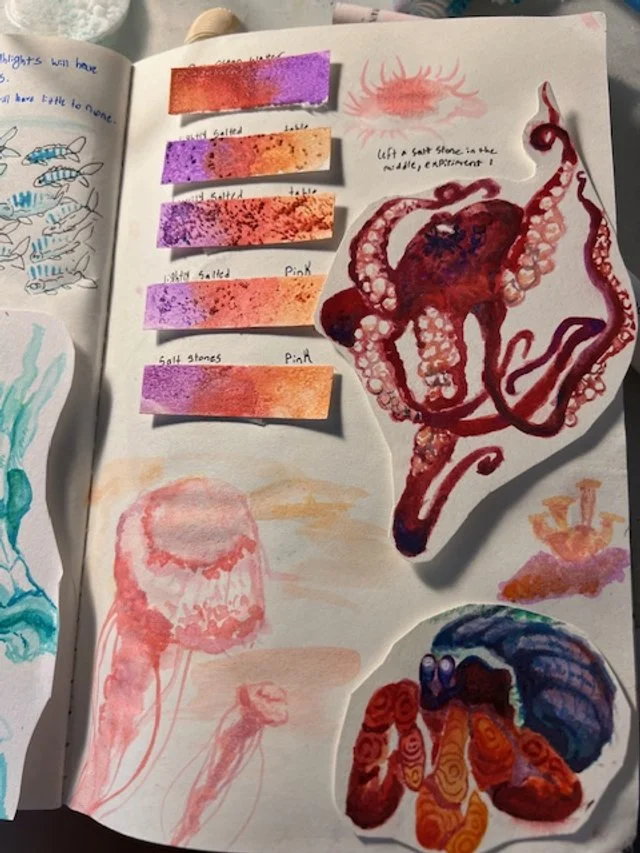
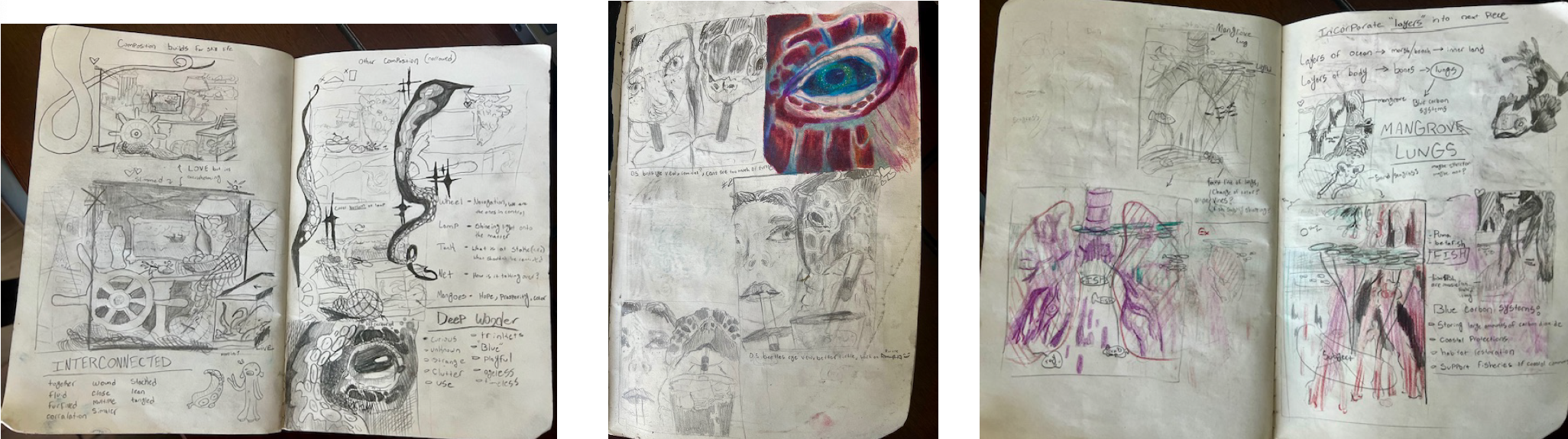
2. I like to start sketchbook pages almost like a mood board with different compositions, colors, and subjects. Since the residency was focused on marine life conservation, all of my pieces were directly related to that. Concept design for my own art is one of my favorite parts, even when I build onto the ideas as I am creating.
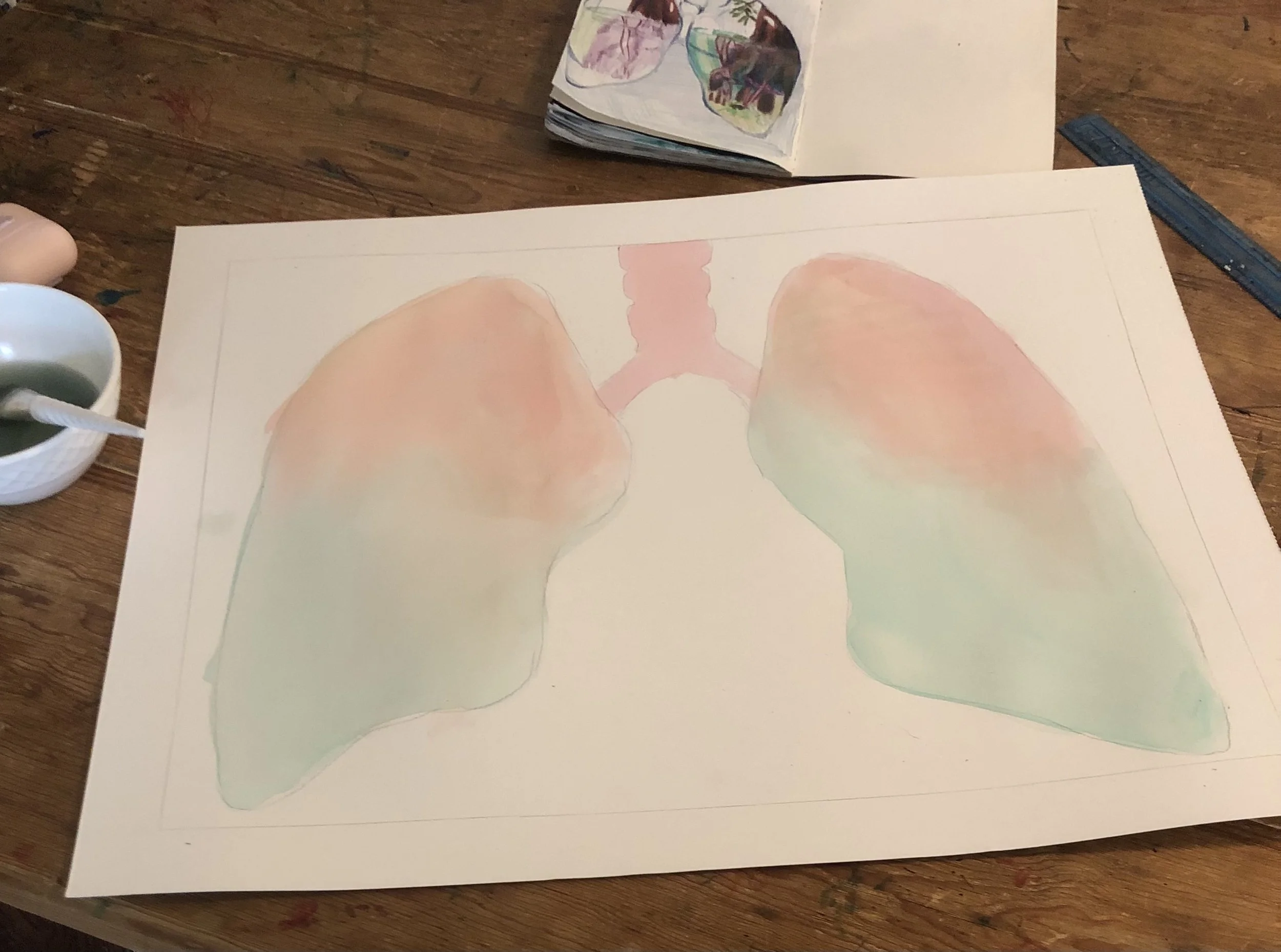
3. For my pieces during the residency, I wanted to incorporate a physical part of the ocean, seawater. I did a seawater color wash underneath all of the pieces to add something unique to this project.
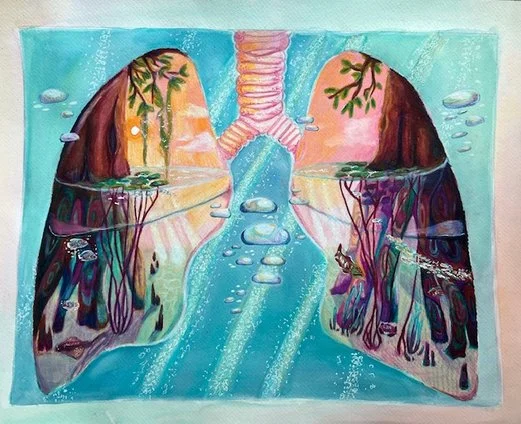
4. I sketch out my composition, render and color with colored pencil as my primary medium. For a few of these pieces I added alcohol markers or gel pens to include some diversity in mediums. Recently, I have been trying to branch out with new mediums as a challenge.
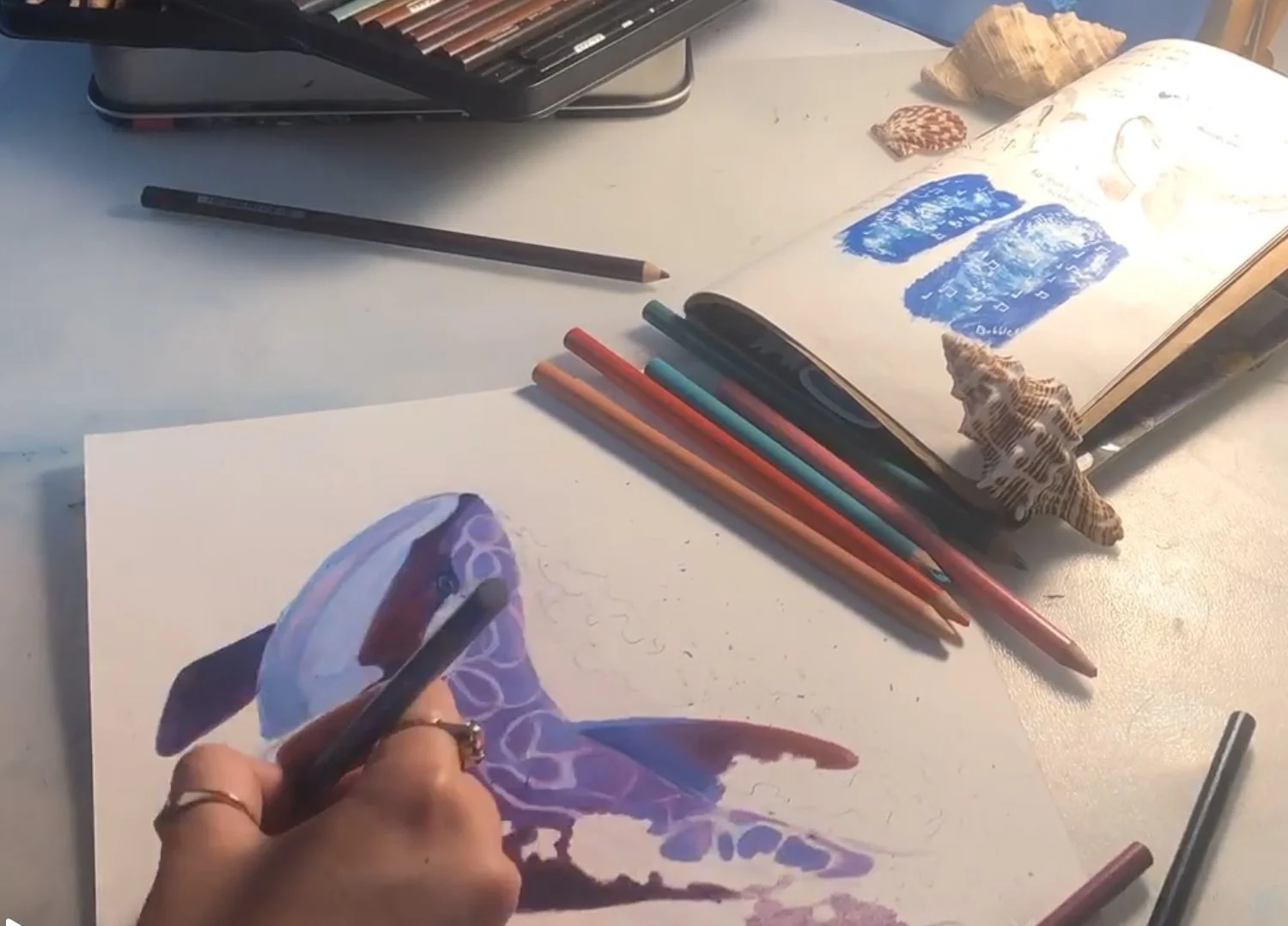
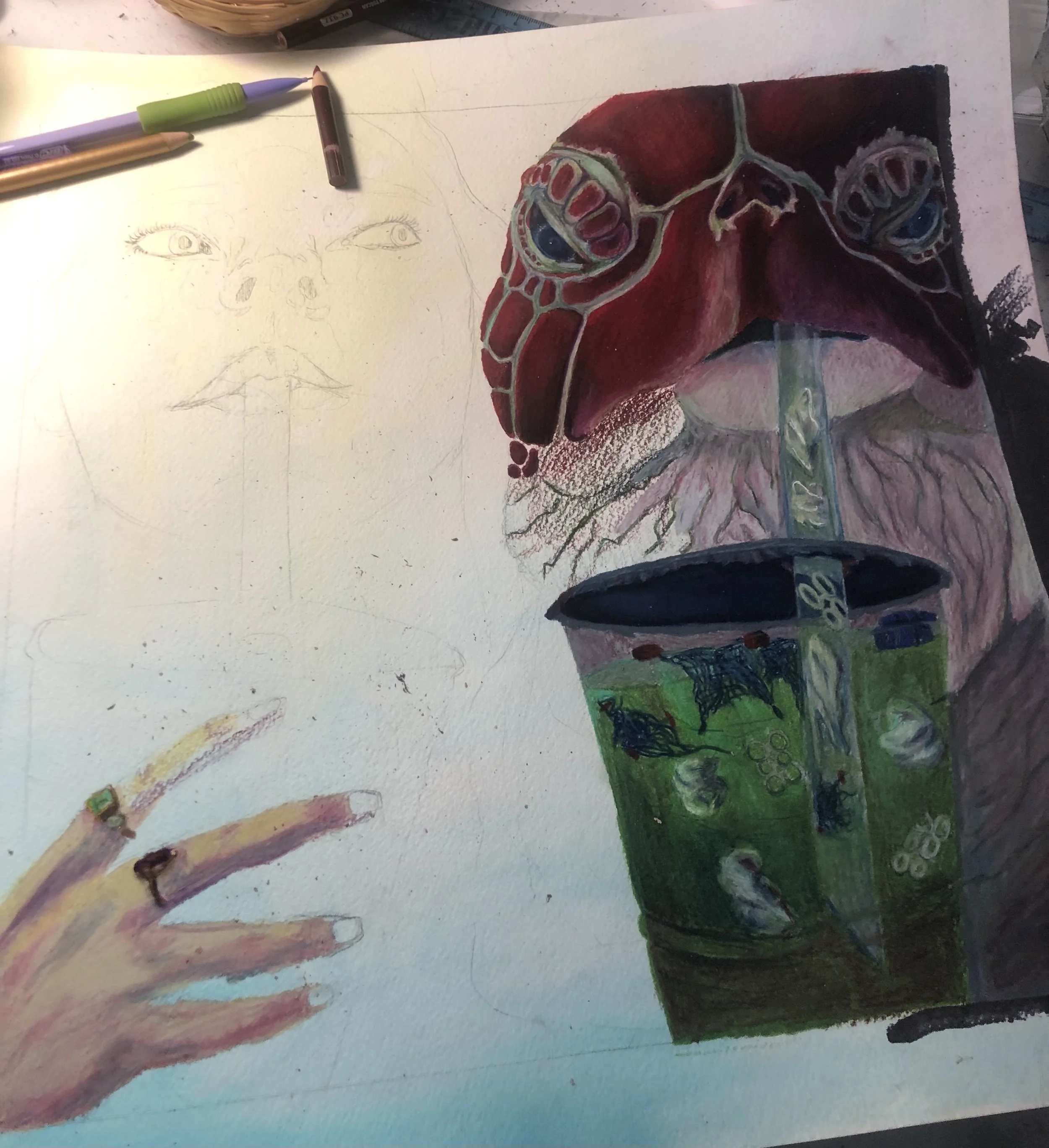
5. In order to make sure my values, light source and scale look good in the final piece, I take a picture and set the saturation to 0 to look only at the values. This helps subjects not blend in to each other.
6. Lastly, I take a final photo of my completed work, and develop a one-page summary of the piece for my art portfolio (noting media, size, prompt/assignment/competition name, message and artist statement).
What made you apply to the Ocean Art Residency?
I was sharing a piece of artwork that I developed for the Bow Seat Ocean Awareness contest with my art mentor, and discussing my interest in marine life, when he mentioned The Ocean Art Residency. He told me it would be a good opportunity to challenge myself and help develop my portfolio on a topic that I'm interested in. As I read the background on the residency and began answering the application essays, it became even more appealing! As a high school student, it is rare to find a residency, especially an international one, that is open to younger people. Since it was summer, and I was not in high school classes, I had more time to dedicate to developing a body of artwork.
What has been the biggest challenge you've faced during this residency, and how did you approach it? / What has surprised you most about the residency program or your own work during this time?
This art residency was a great learning experience for me! I'm a high school student and am very involved in a variety of extra-curricular activities, even during the summer months. This residency helped me work on time-management, working toward deadlines, and making time for my art, amidst my other commitments. I was used to working on artwork for school, but this residency was a bit more accelerated. I liked the challenge, stepping out of my comfort zone, and looking back I'm proud of what I was able to accomplish given the duration of the residency!
With this residency I also learned better ways to present my artwork, the importance of preparing speaking notes, how to give, receive and apply feedback, as well as how to ask artists questions about their process and art work.
While I was the youngest participant, I tried to present myself in a mature and professional manner. It was wonderful to hear more experienced artists talking about their process and their art work, as well as what life is like as an artist, after college. At the same time, I learned that my perspective as a young person is valuable, and that people can learn from me too.
What excited me the most in this residency was the amount of support the other participants gave me and the amount of work (with set timelines) I was able to accomplish in one month.
How did the residency influence the way you think about the ocean or environmental issues?
This residency made me think about the ocean in new ways and how I can raise awareness. While in the residency, I loved knowing that I could always learn more about the underwater environments and that led me to making marine life my sustained investigation for my AP portfolio.
Did you connect any part of your artwork to ocean conservation, climate change, or human-ocean relationships?
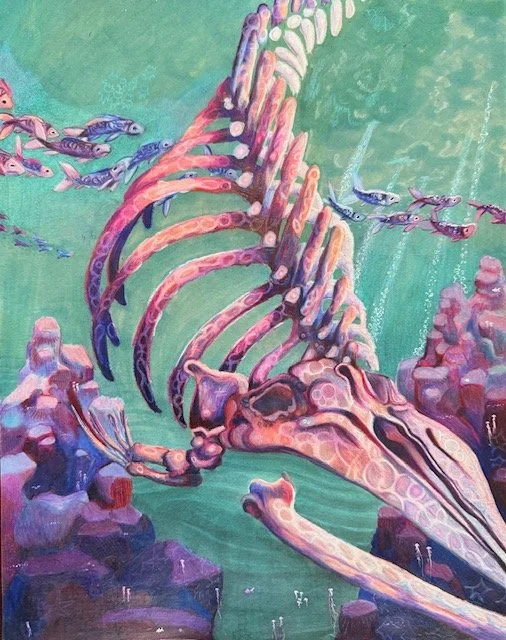
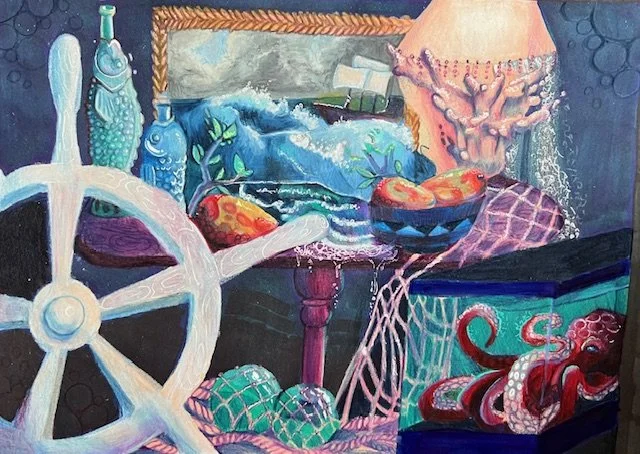
Yes, all of my pieces featured a different aspect of our ocean and marine life. I used seawater to watercolor paint to bring in a physical part of the ocean. My pieces highlighted different issues that our Oceans face. My main goal in making this art was to express human and marine life interaction in a surreal and beautiful way.
What message do you hope your art communicates about our oceans?
I believe art can give voice to what is often overlooked or ignored. Every time I share my work it is an opportunity to also discuss why I am focusing on marine life as a subject matter. My art highlights the negative impacts of human activity on marine ecosystems, but with a hopeful tone. I want to raise awareness of our oceans’ compromised health through the power of visual art. My work is a call to action and advocacy. Can we respect the life we share this planet with by choosing true preservation efforts over destruction? Can society reflect and reverse its reckless habits that go beyond broken promises and policies? Art gives us the space to imagine new futures.
How do you plan to continue developing the ideas you started here?
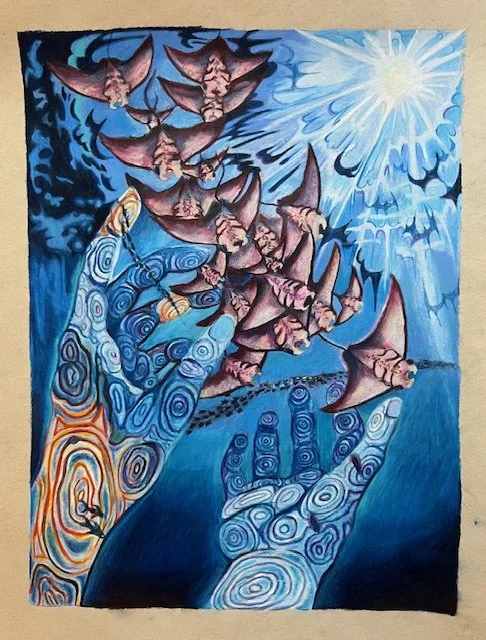
I'm focusing my junior year art portfolio on marine life reclaiming what was once theirs and their interactions with humanity. Attending portfolio reviews, sharing some of my residency pieces, I have received positive feedback on my messaging and tone. My most recent piece, Harmony in Motion features Giant Manta Rays being guided by my own hands. Typically, harmony is portrayed as peace and stillness, but I expressed it with a sense of movement. The light source conveys a sense of hope for the endangered species as well as my own outlook on the environment.
Has this residency sparked any new long-term interests or goals?
This residency has reinforced my interest in marine life and using my art to convey an ocean conservancy message. It has prompted further investigation and proven to be a rich source of artistic development. Each time I receive a competition prompt or class assignment, I run it through my personal filter - How can I use this piece to communicate about marine life reclaiming and ocean conservancy?
What advice would you give to another high school student applying for this program?
It is a great learning experience! Go for it.
Go outside your comfort zone. Yes, there will be challenges, you will question yourself, you will take creative risks, some pieces will be stronger than others, but you will learn, you will develop your skills, try new materials and messaging, and you will meet other really interesting people!
Make time for your art. It is important to plan your piece, and schedule time to get milestones completed. You can't rush the process or cut corners, and expect the work to be great.
Put yourself out there because you may get some interesting opportunities. On one of the phone calls the music production company was asking for album art. I developed a piece that they ended up using!
How has your creative process changed or evolved?
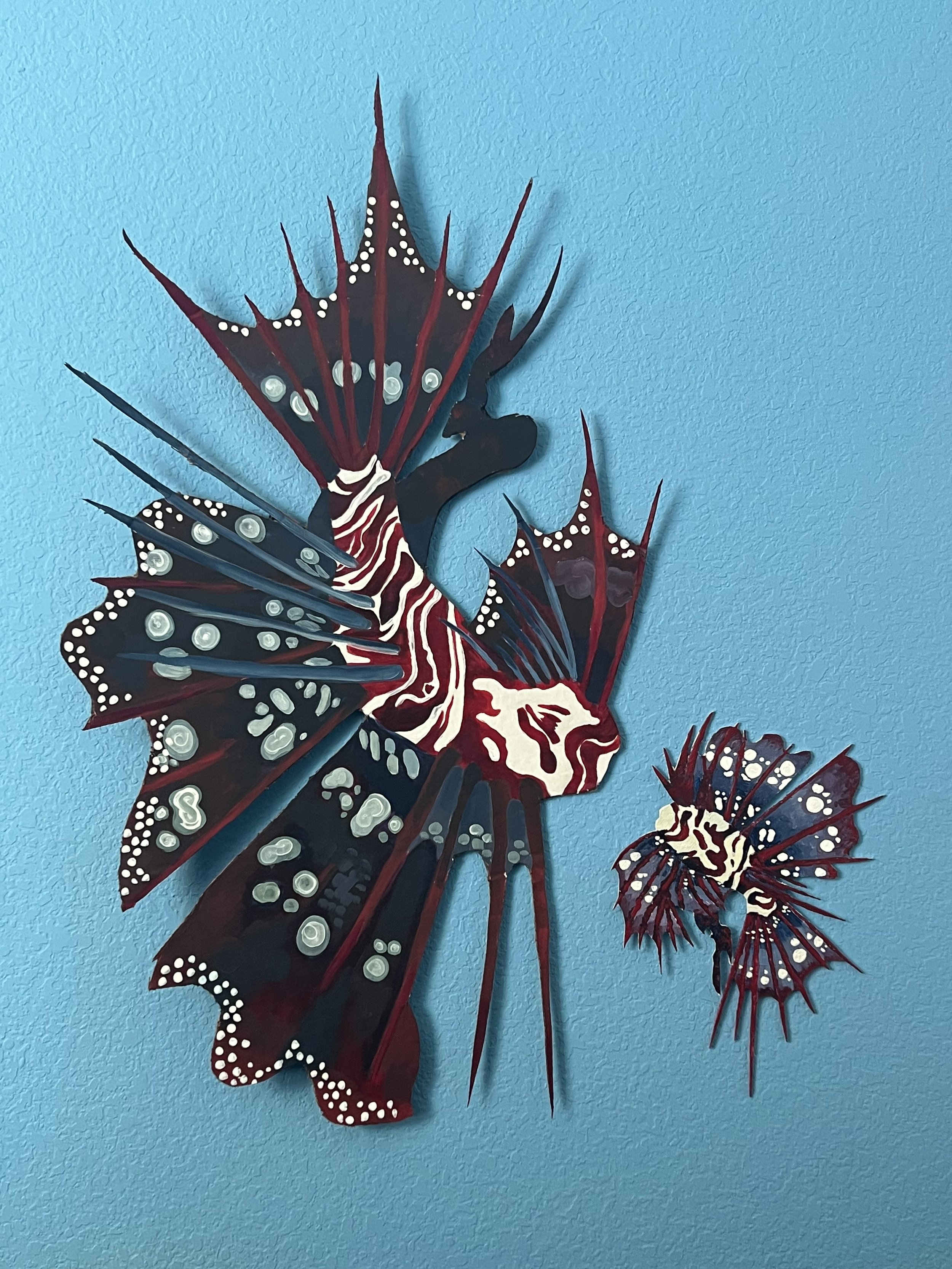
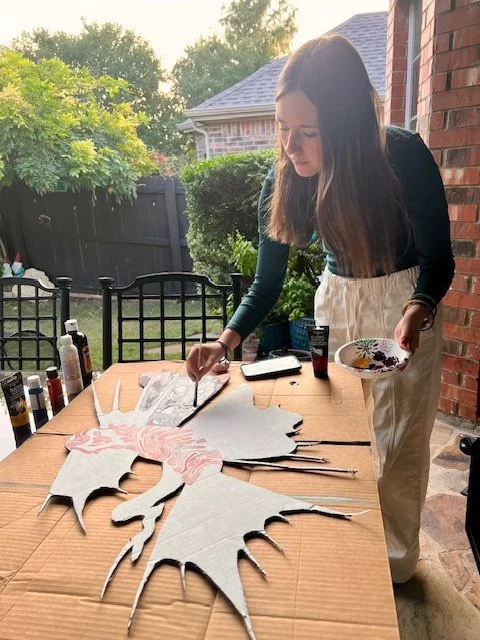
The studies in my sketchbook are more complex. I sketch an eye, the fish scales, how the light will hit the water, a few different angles of a marine creature. Taking the time to explore ideas helps the finished piece to be richer, better informed, and with tighter messaging. Before, I used only Prismacolor pencils, but now I experiment more with a combination of media (e.g., watercolor, acrylic paint, alcohol marker and gel pens). With Prismacolor pencils it is challenging to cover a lot of ground in a limited amount of time, but I have found that paint allows me to scale up to larger pieces. Recently I created this Lionfish shaped canvas piece. I cut the shapes out of cardboard and wood, and used acrylic paint. Since it was a shaped canvas I played around with the installation so that the two pieces convey a message about a mismatched duel.
What role do you believe artists can play in protecting our oceans?
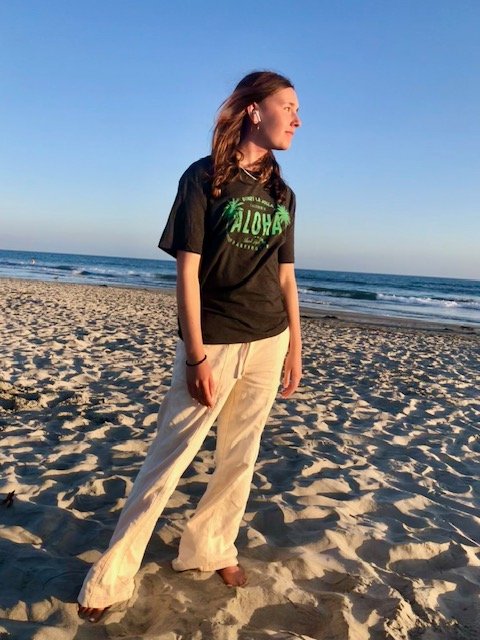
Artists can help people who are not engaged in Ocean awareness to see the beauty in the World's Waters, some of the threats to this beauty, and a better, imagined future. Each time I have a conversation about my art, the marine life subject I featured, the messaging I'm conveying, it is a platform for me to share my voice about protecting our oceans.
What would you like to create next?
I plan on continuing to create marine and nature centered art. I know as an artist my style, skills, and interests will change and grow, but I know that I will always have a love for finding beauty in our waters. My next art piece is going to be for an art program where the assignment is to take inspiration from two pieces from a museum and create an original composition. This will be a large painting on the theme of a sailor’s life, his experience with the sea, and his stories.
If you could be any ocean creature, what would you be and why?
I would definitely be a Giant Manta Ray for a few reasons. I have always loved their graceful movements. Seeing something that has such a powerful presence while also being gentle and peaceful, amazes me. Like Mantas, I also have a curious, patient, and social nature. Mantas are constantly moving out of necessity. I too am constantly seizing new opportunities, evolving as an artist, and letting past experiences affect my path. Similar to the Manta who travel in pods, or fevers, I have groups of friends who share my different interests and allow me to be myself.
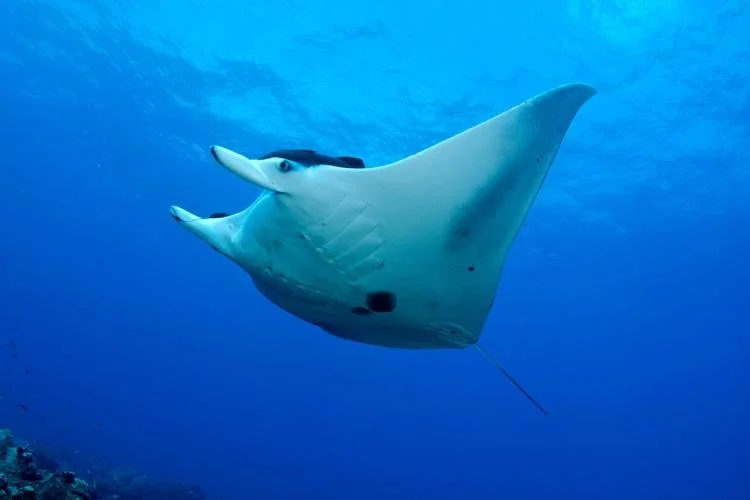
Giant manta ray in Flower Garden Banks National Marine Sanctuary. Credit: NOAA/George Schmahl